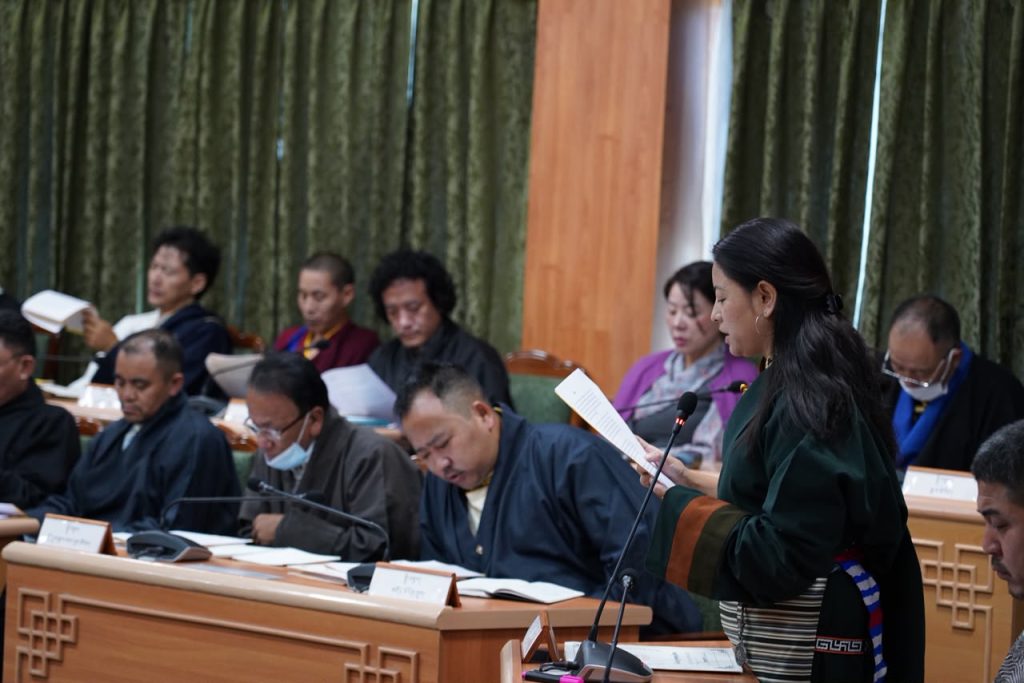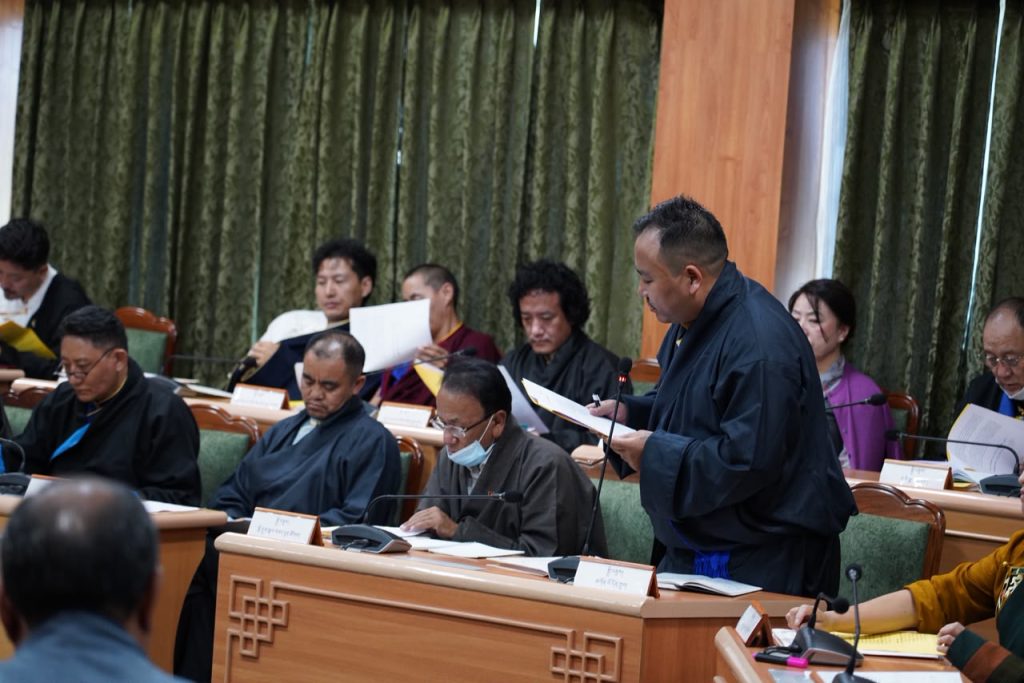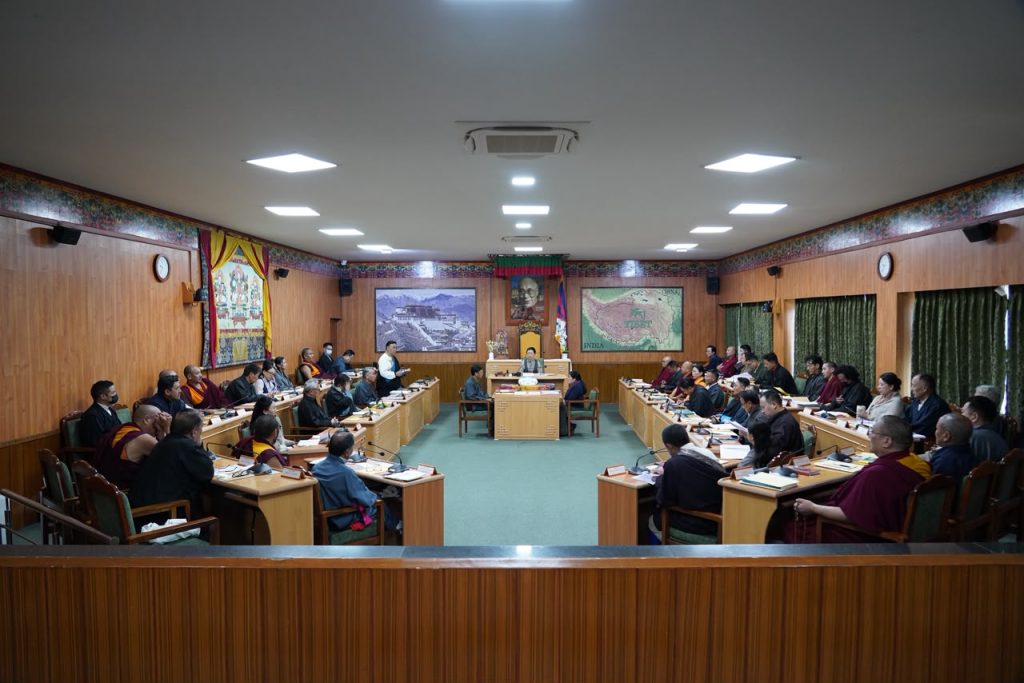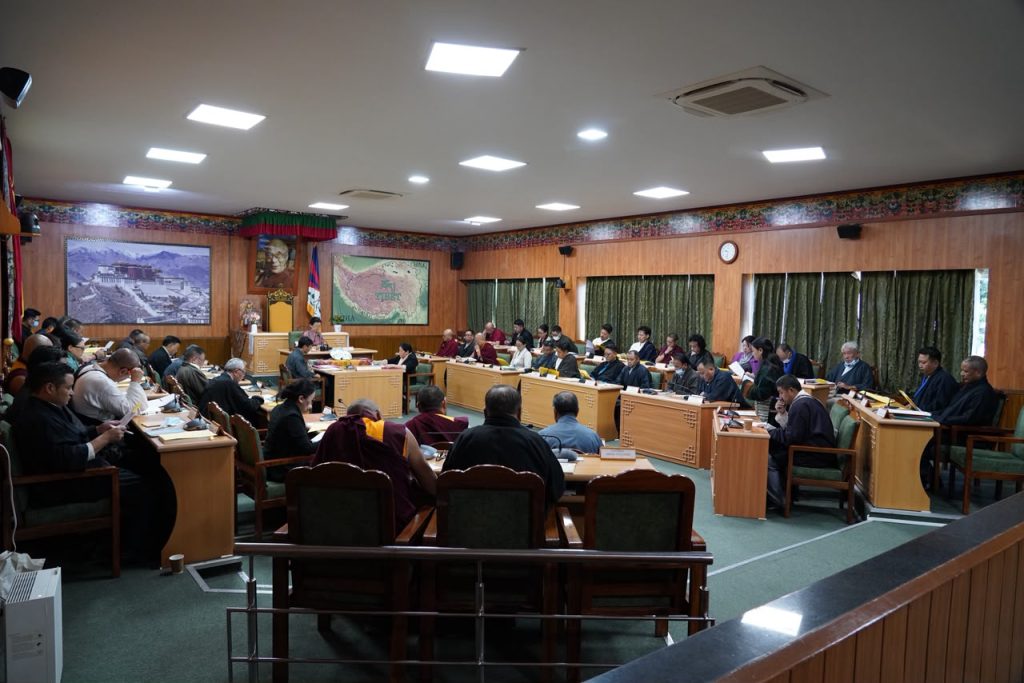
Dharamshala, 21 September 2026: The fifth day of the second session of the 18th Tibetan Parliament-in-Exile commenced with a Solidarity Motion on the critical situation inside Tibet, moved by Parliamentarian Gyaltsen Choekye Gagya and seconded by Parliamentarian Gonpo Dhundup.
The Tibetan Parliament-in-Exile adopted the resolution expressing solidarity with Tibetans inside Tibet, calling for the protection of their human rights and cultural identity, and urging the Chinese government to address the Sino-Tibetan conflict through dialogue.
The resolution states that Tibetans inside Tibet have endured decades of brutal and oppressive repression on their religious and national identity. It pays tribute to Tibetans who have protested against Chinese government policies, including those who have undertaken self-immolation, and commends what it describes as their courage and sacrifice.
The resolution specifically refers to Tibetan martyr Rangzen Lobga, who recently died after self-immolating outside the United Nations Headquarters in New York in protest against the Chinese government. The Tibetan Parliament-in-Exile expressed condolences to his family and called on United Nations leaders to raise the matter with the Chinese authorities and take steps to address the demands raised by Tibetans.
On the broader Tibetan issue, the resolution calls for a negotiated settlement between Tibetans and the Chinese government. It invokes the approach advocated by His Holiness the Dalai Lama, stating that the conflict should be resolved through dialogue. At the same time, it rejects legislation and policies such as the so-called “Ethnic Unity and Progress Law,” which it says are aimed at weakening Tibetan cultural and national identity.
The resolution also calls for the release of Tibetans it describes as having been arbitrarily detained or imprisoned. It raises particular concerns over the case of the 11th Panchen Lama, and calls for greater protection of human rights in Tibet.
Among its other demands, the resolution urges an end to restrictions on the learning, use and promotion of the Tibetan language, as well as policies that it says have harmed Tibet’s natural environment. It calls for greater protection of Tibetan religion, culture, language and traditions.
The resolution concludes by expressing gratitude to the Government and people of India for their support of Tibetan refugees. It also acknowledges governments, parliaments, non-governmental organizations and individuals around the world that have supported the Tibetan cause, particularly countries that have adopted legislation or parliamentary resolutions concerning Tibet.
The house adjourned at 6:30 PM.