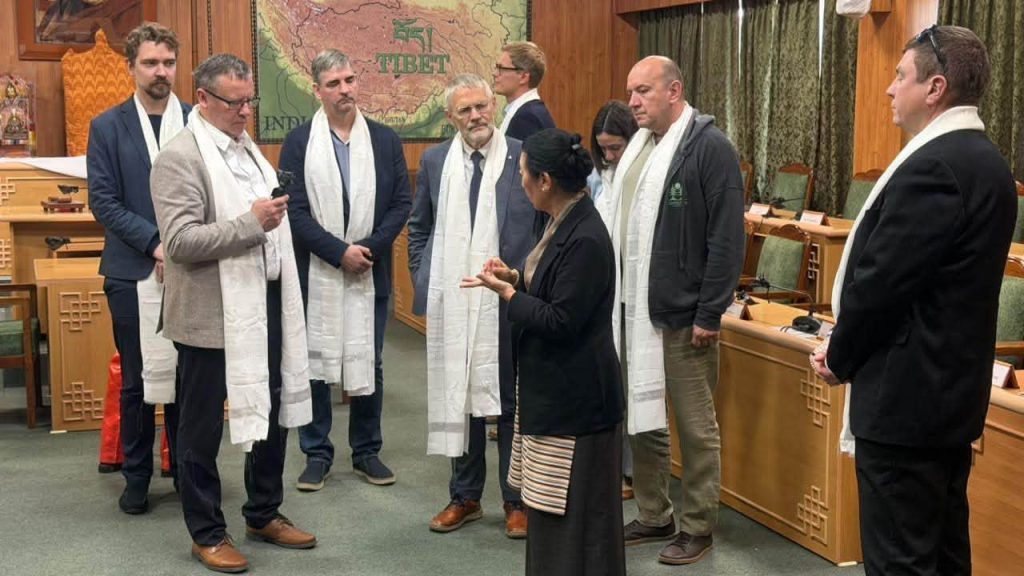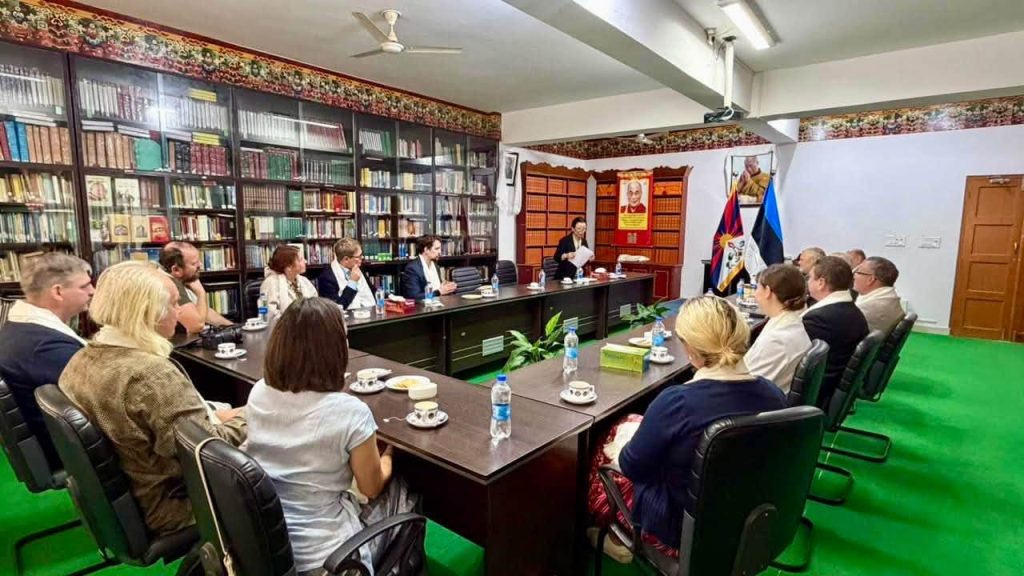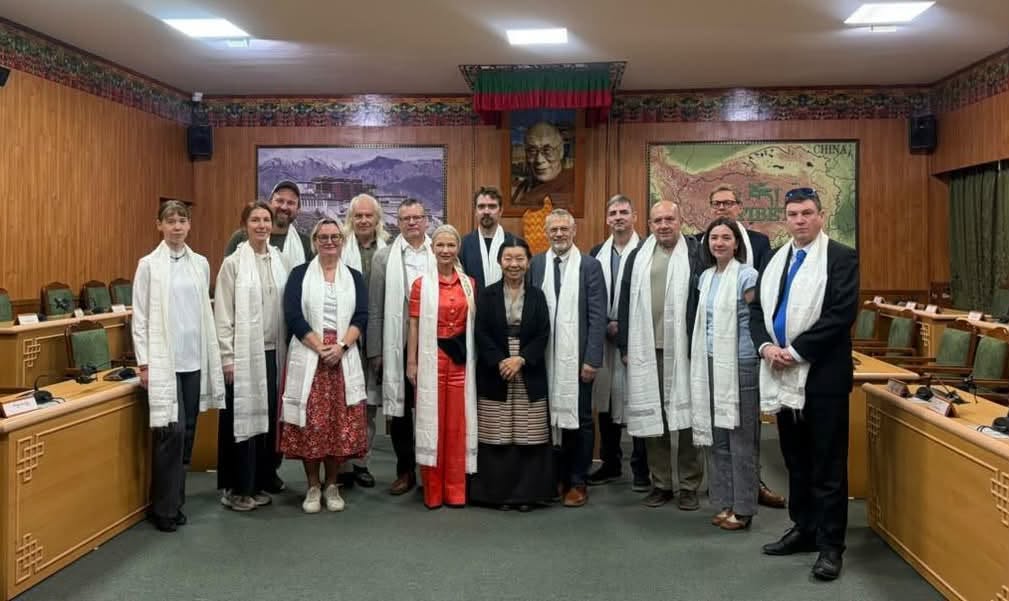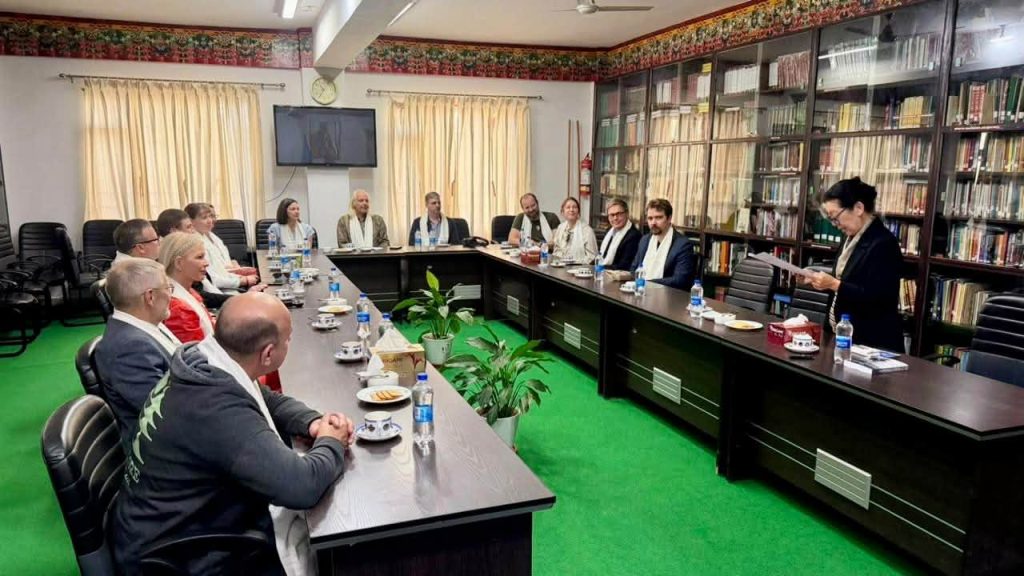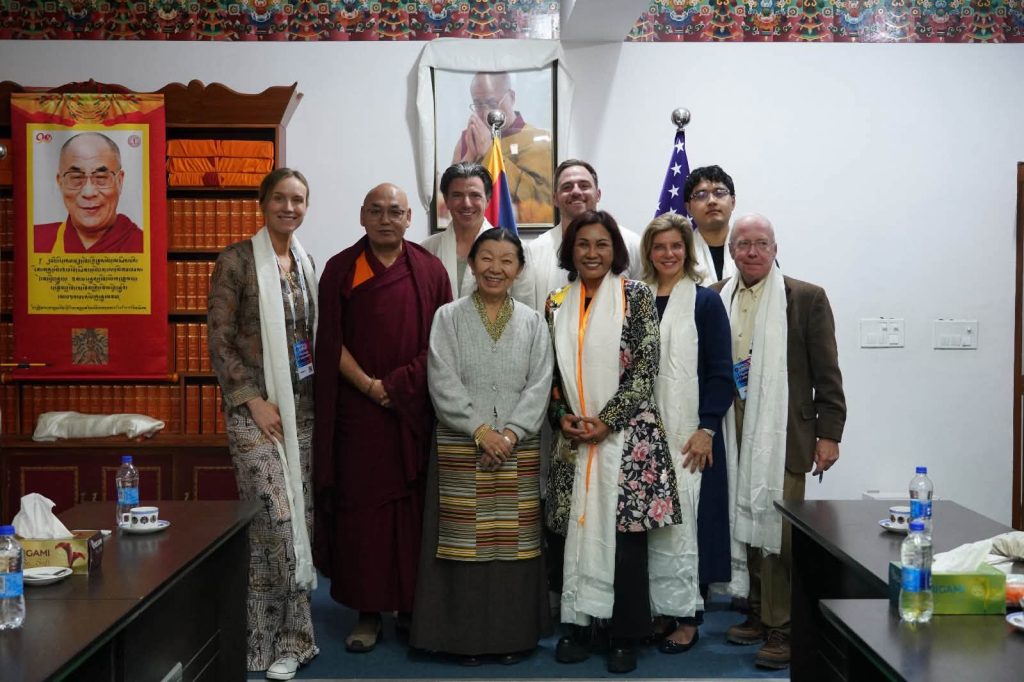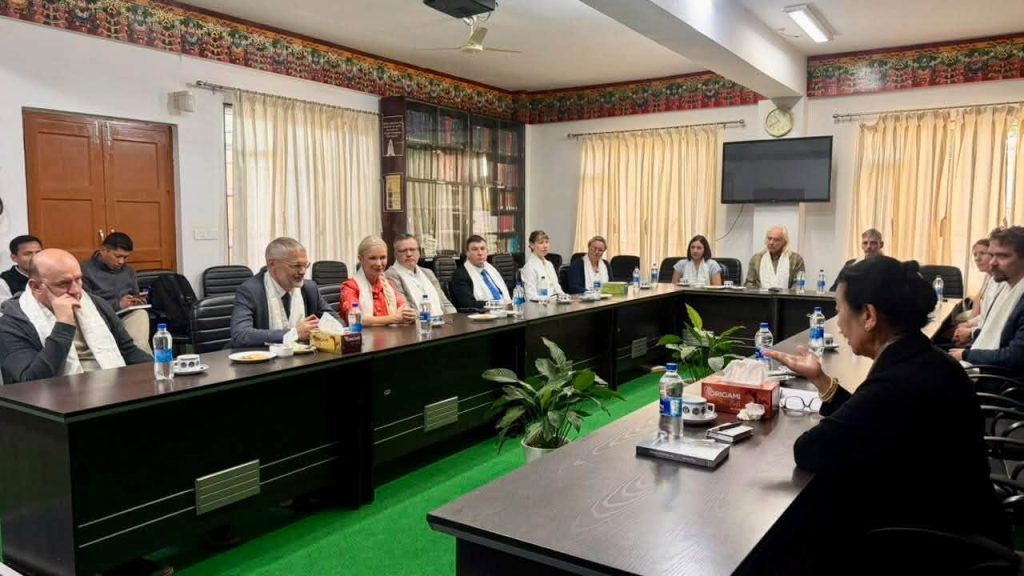
Dharamshala, 6 November 2026: An Estonian parliamentary delegation visited the Tibetan Parliament-in-Exile on 6 November 2026 and met with Speaker Dolma Tsering Teykhang at the Standing Committee Hall.
The delegation comprised Estonian parliamentarians Toomas Uibo, Grigore-Kalev Stoicescu, Tiit Maran and Kadri Tali, along with representatives from the fields of diplomacy, entrepreneurship, investment, cultural heritage, environmental conservation, research and the arts. Other members of the delegation included Evar Riitsaar, Mare Mätas, Monika Wessels, Riivo Anton, Allan Kaldoja, Piret Simson, Rando Künnapuu, Mati Kose, Annabel Piiritalu and Roy Strider.
Welcoming the delegation, Speaker Dolma Tsering Teykhang expressed her appreciation to Roy Strider for bringing not only members of the Estonian Parliament but also a diverse group of professionals and representatives of civil society to Dharamshala. She highlighted the longstanding affinity between Estonia and Tibet, particularly their shared experiences of foreign domination and their struggles to preserve their distinct national identity, culture and way of life.
Drawing parallels between the two peoples, the Speaker commended Estonia’s history of peaceful resistance, particularly the role of music and cultural expression in asserting national identity. She said that Estonia’s experience demonstrated how a people united by a common identity and aspiration could withstand attempts to suppress their culture and identity.
Addressing the situation inside Tibet, Speaker Dolma Tsering Teykhang described the present period as one of the darkest in Tibet’s history. She said that the survival of Tibet’s distinct national identity, culture, language and religious traditions is under severe pressure. She further stressed the importance of examining the historical facts concerning Tibet rather than accepting narratives dictated by the Chinese government.
The Speaker also drew attention to the human rights situation in Tibet, stating that restrictions on religious practice, freedom of expression and cultural identity have severely affected the Tibetan people. She highlighted the Chinese government’s policies concerning Tibetan language education and the establishment of colonial-style boarding schools, where Tibetan children are separated from their families and Tibetan cultural environment.
She further raised concerns regarding the recently introduced “Ethnic Unity and Progress Law”, arguing that its implementation poses serious challenges to the preservation of the distinct identities of Tibetans and other non-Han communities.
A significant part of the Speaker’s address focused on the ecological significance of the Tibetan Plateau. She emphasised that the environmental consequences of developments on the Tibetan Plateau extend far beyond Tibet, affecting India, Nepal and other countries across South and Southeast Asia through the major river systems originating from the plateau.
She called for greater international attention to Tibet’s environmental significance and urged greater Tibetan participation and representation in international climate discussions. Referring to the Tibetan Plateau as the “roof of the world”, she stressed that its glaciers, permafrost and water resources are of global importance.
Speaking about Tibetan democracy in exile, Speaker Dolma Tsering Teykhang outlined the evolution of the Tibetan democratic system under the vision and guidance of His Holiness the Dalai Lama and spoke about the Middle Way Approach, stating that Tibetans seek a peaceful resolution that would allow Tibetans and Chinese to coexist while preserving Tibet’s distinct identity, culture and religious traditions.
She expressed gratitude to the visiting delegation for taking the time to come to Dharamshala and gain a first-hand understanding of the Tibetan situation. She appealed to the delegates to share their experiences with their colleagues, friends and wider societies and to help raise international awareness of the Tibetan cause.
In response, the visiting Estonian parliamentarians expressed solidarity with the Tibetan people and reflected on the similarities between the histories of Estonia and Tibet.