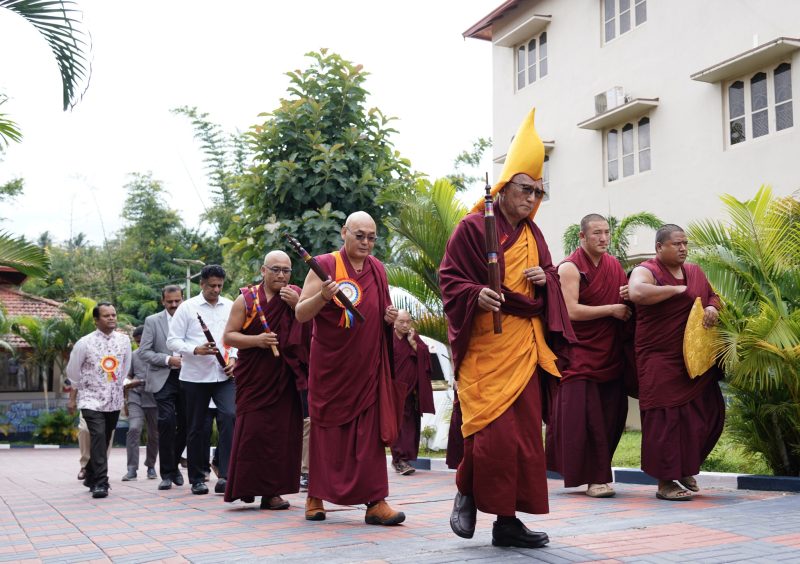
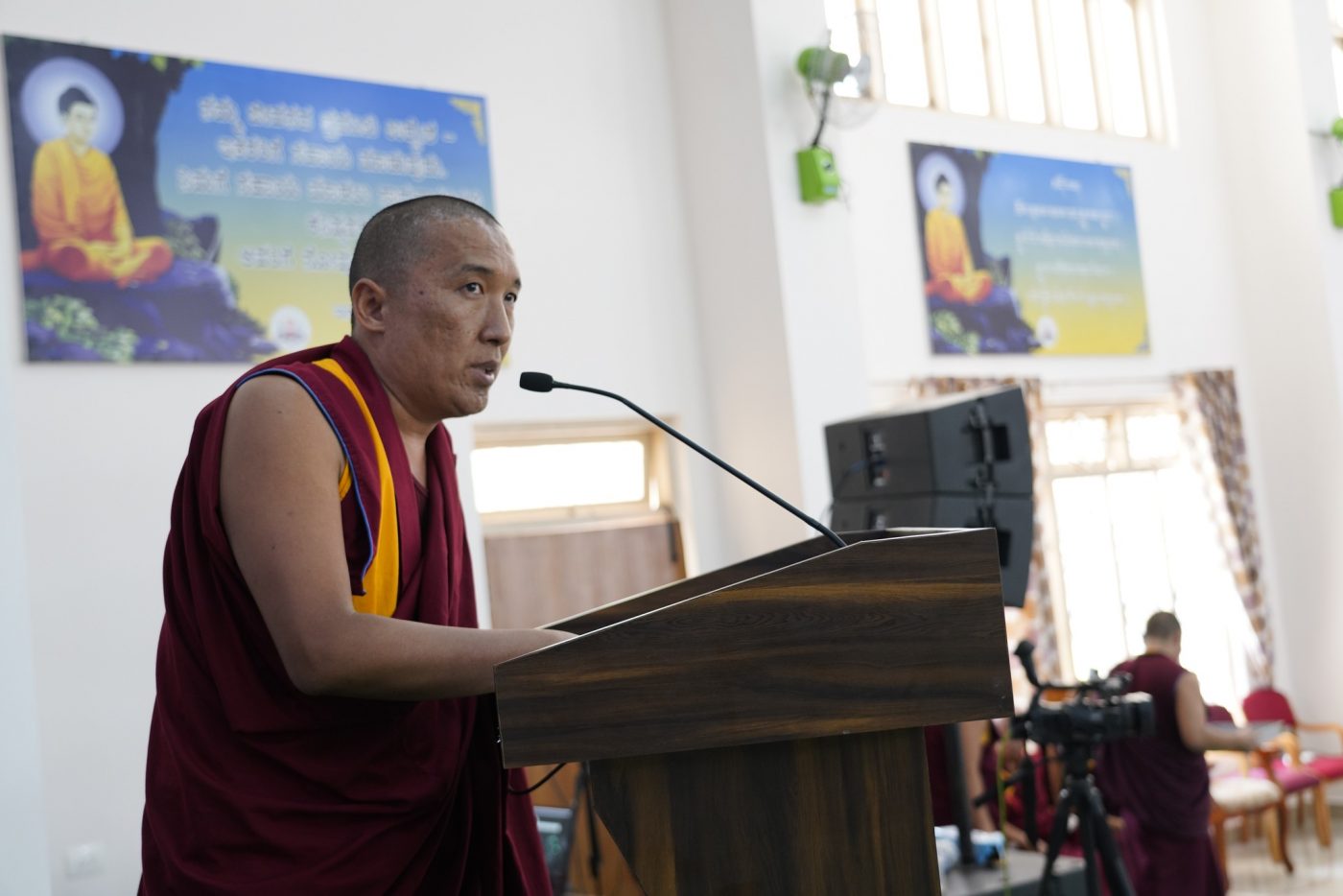
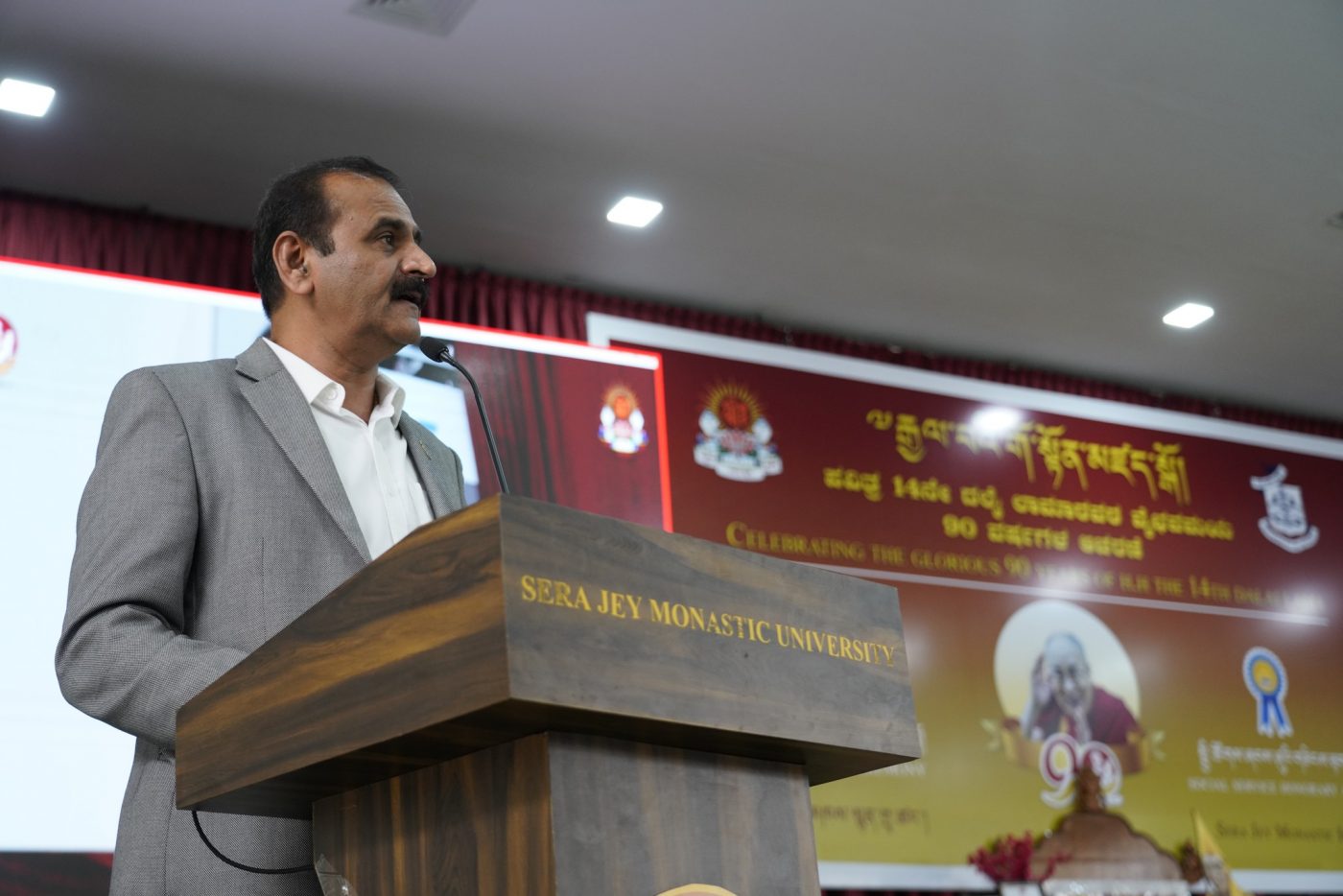
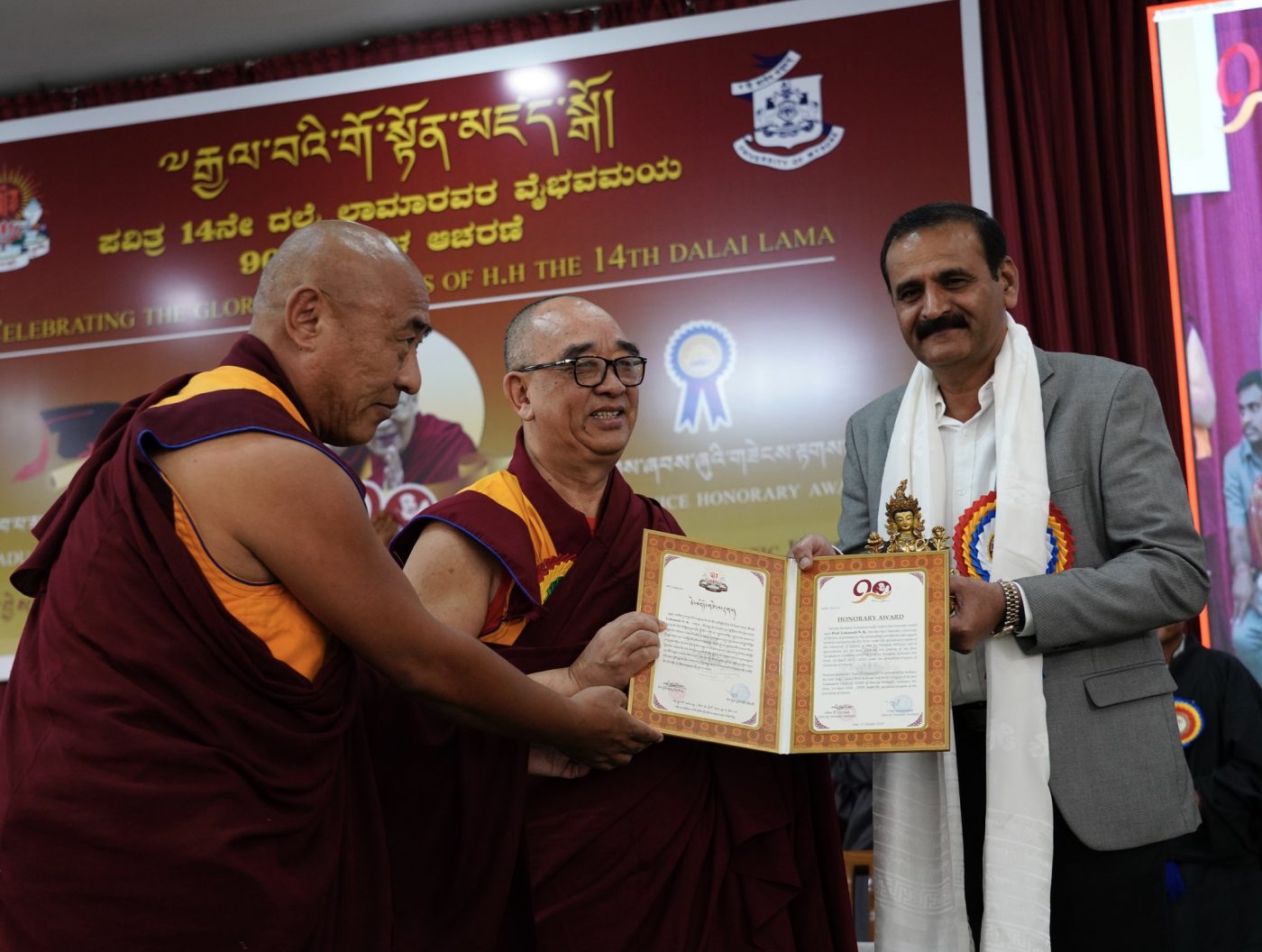
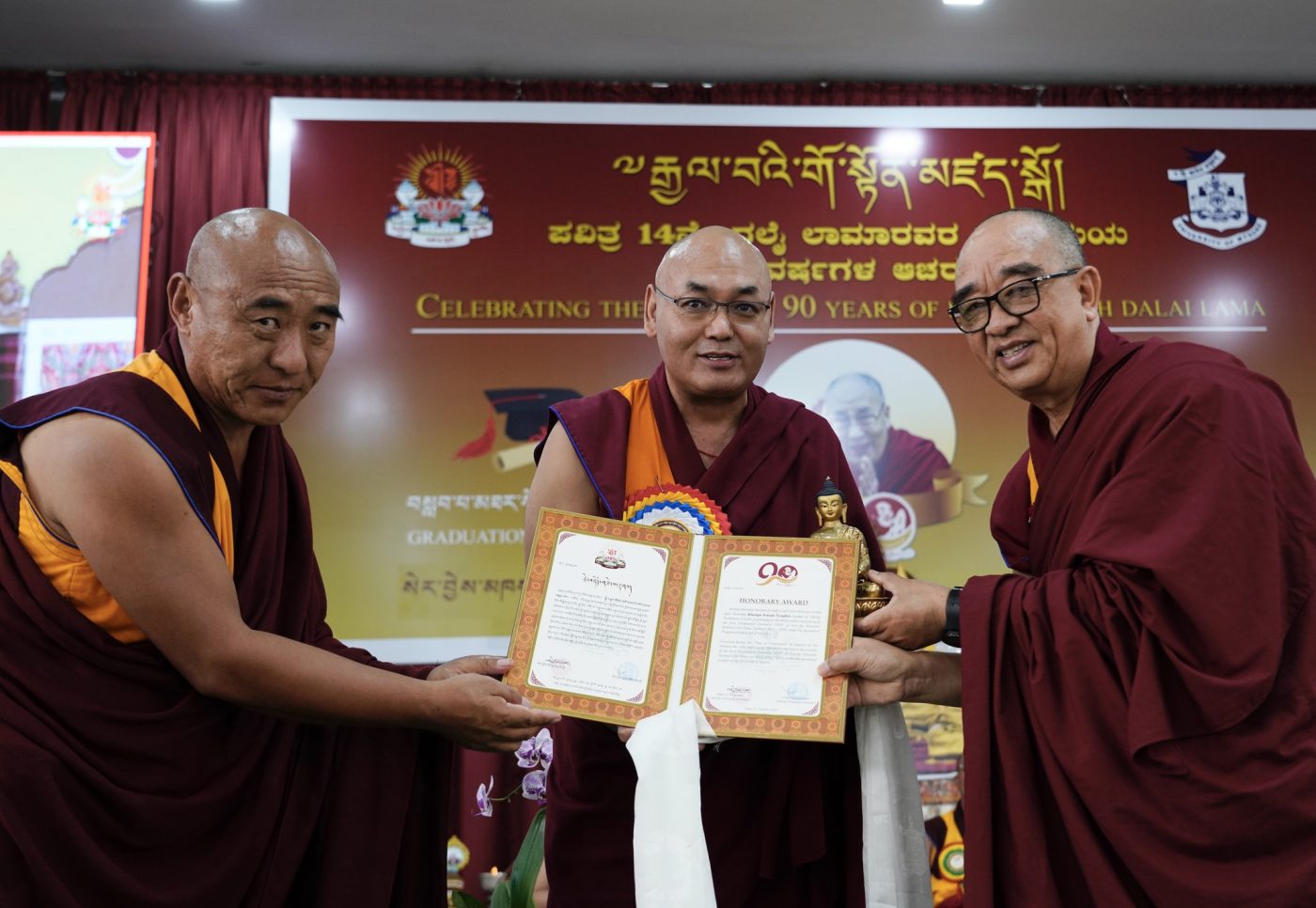
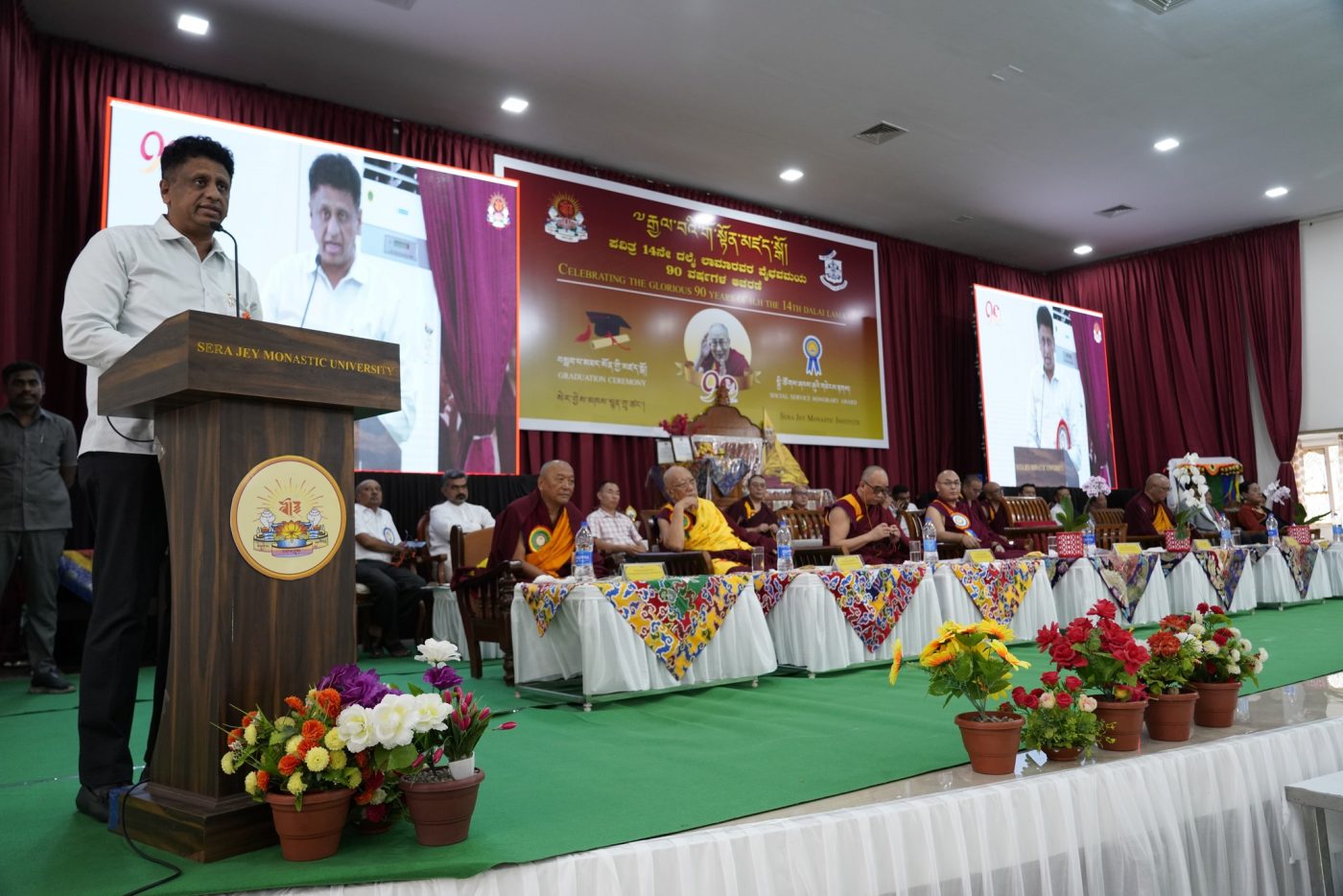
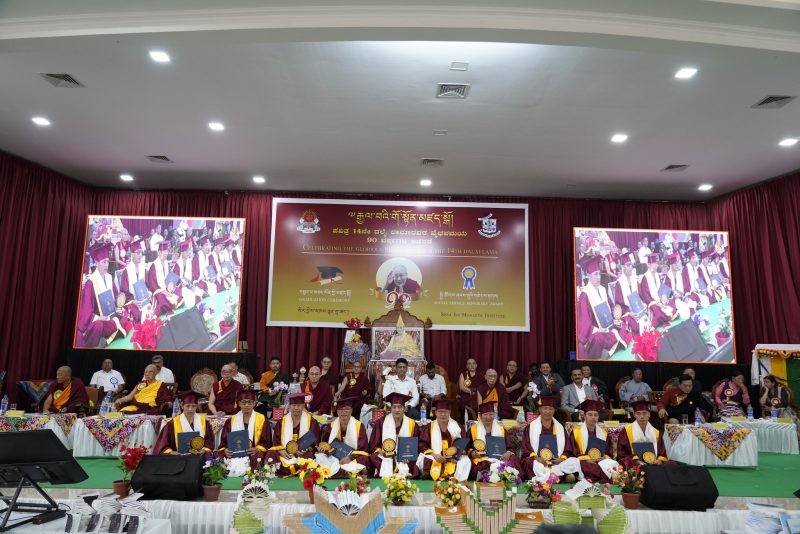
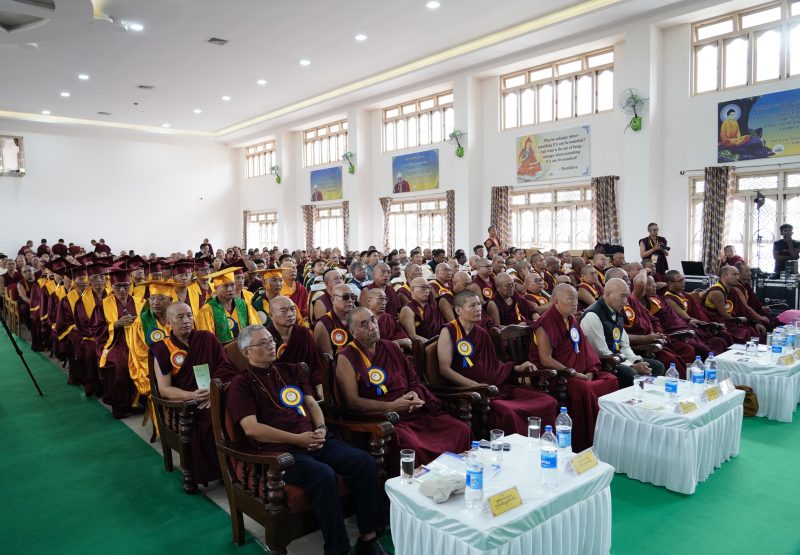
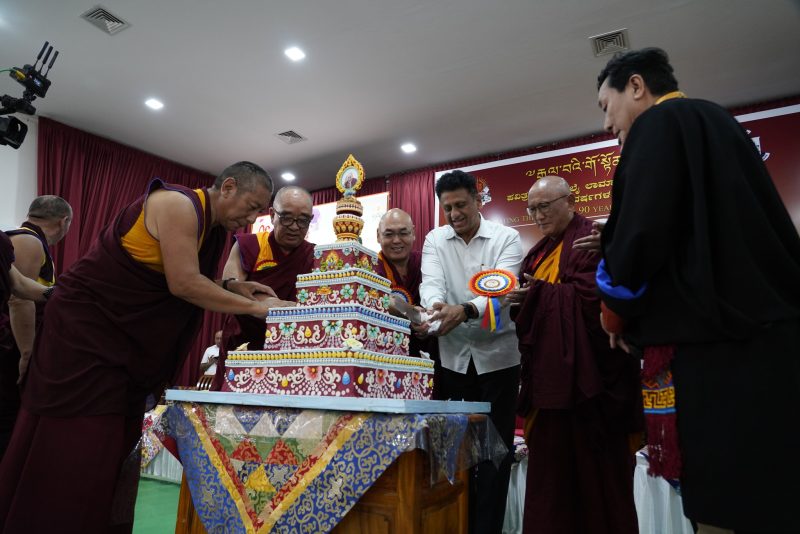
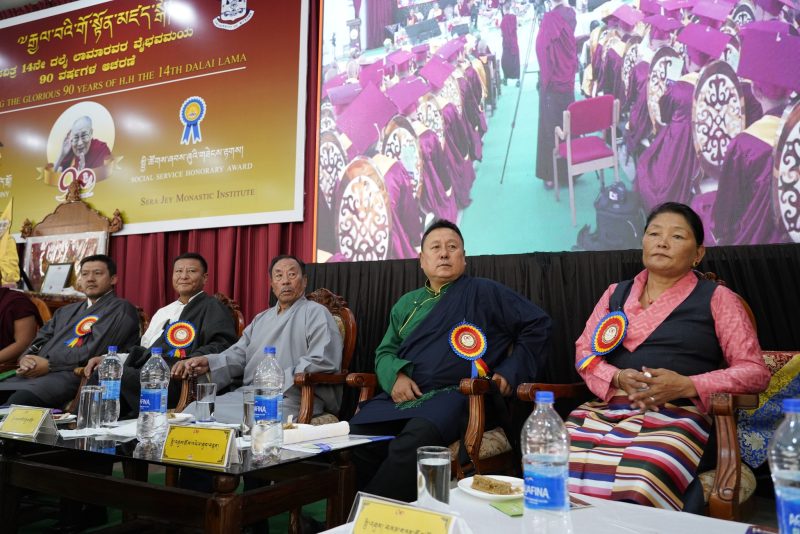
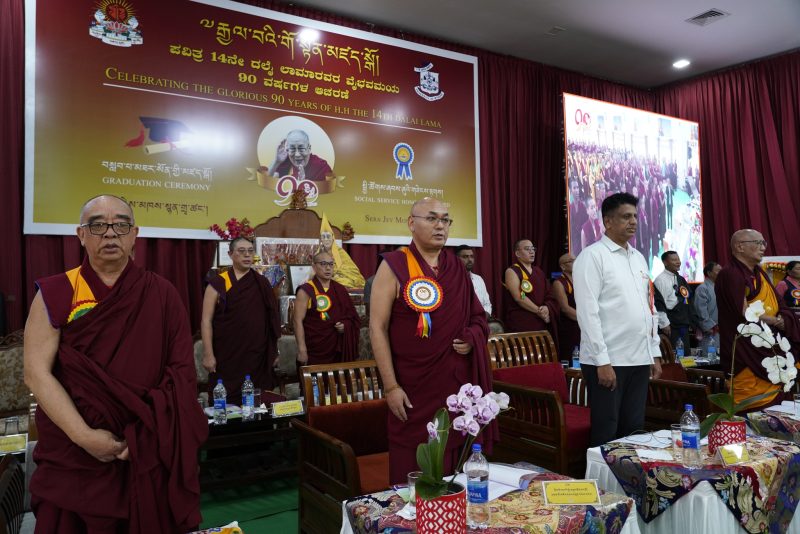
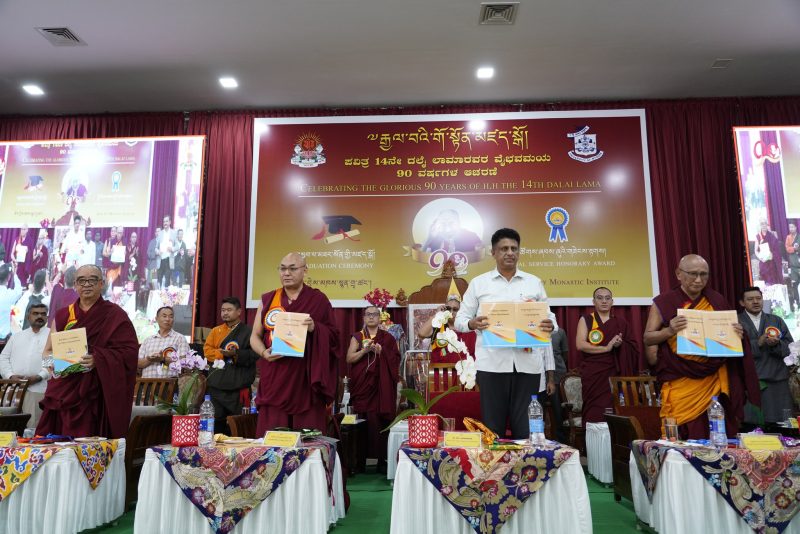
Dharamshala, 17 October 2025: The convocation ceremony of Sera Jey Monastic Institute was held in Bylakuppe, South India, as part of the Year of Compassion celebrations commemorating the 90th birth anniversary of His Holiness the 14th Dalai Lama.
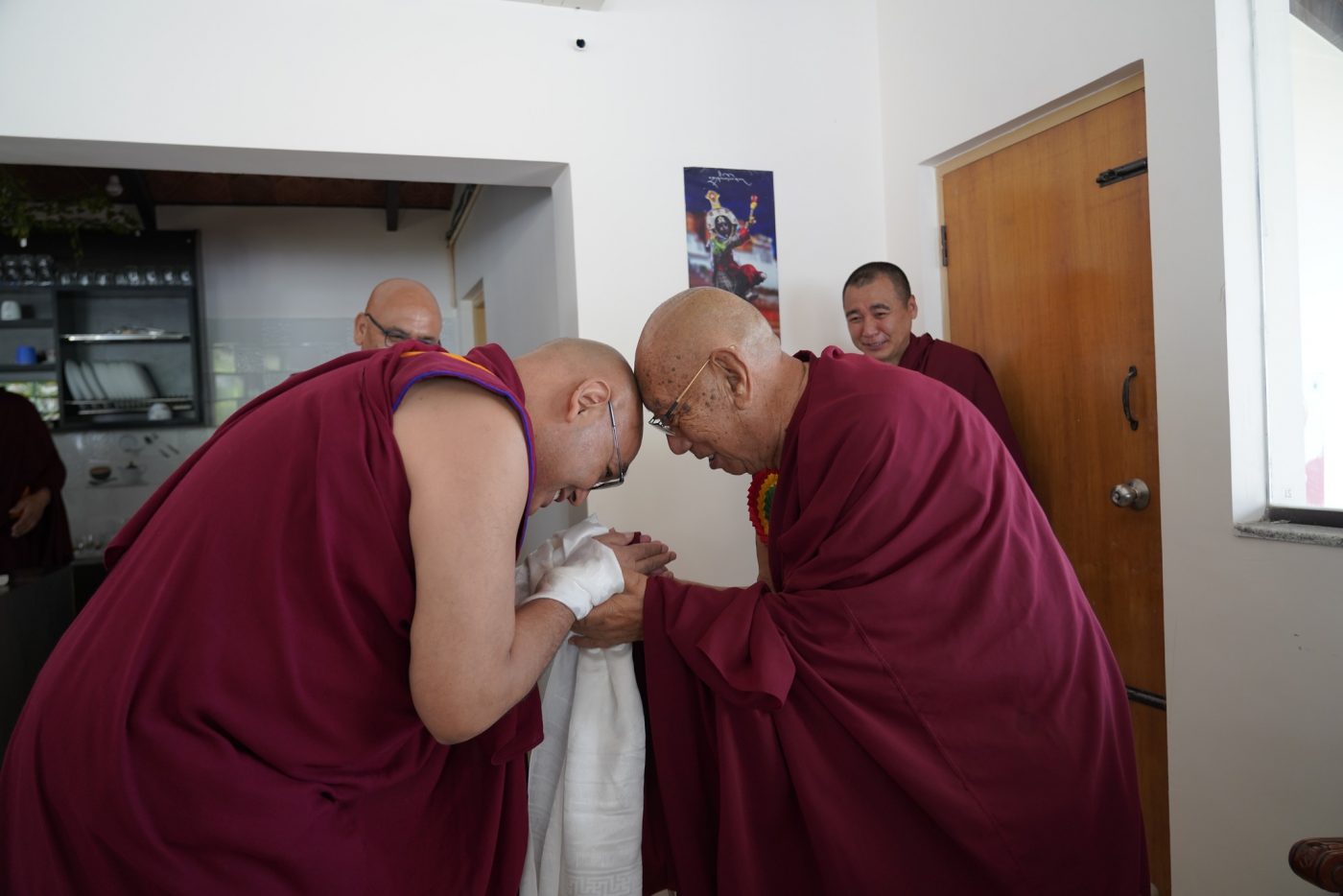
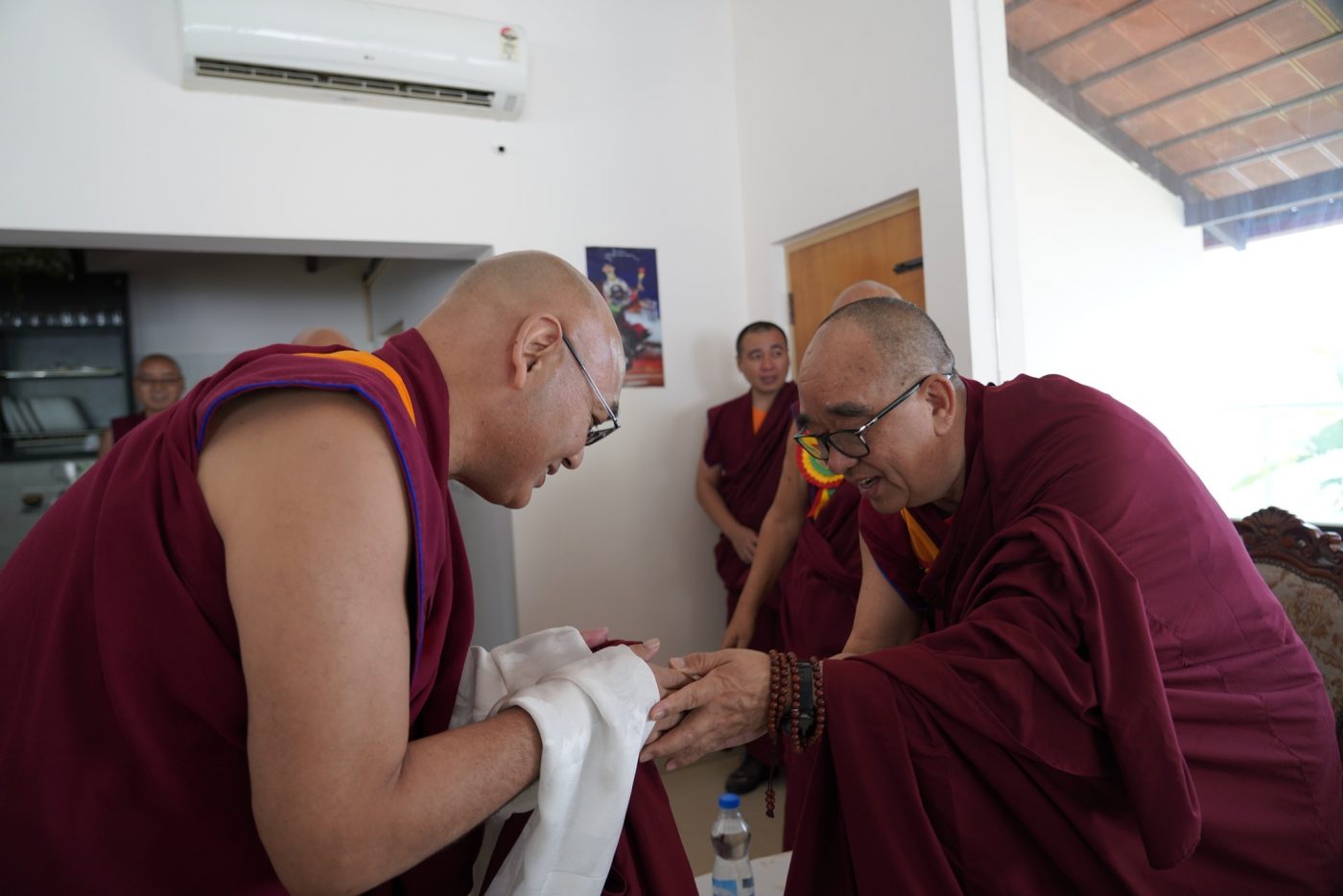
The ceremony was graced by several distinguished guests, including Dr. M. C. Sudhakar, Hon’ble Minister for Higher Education, Government of Karnataka; Sharpa Choeje Rinpoche Jetsun Ngawang Jorden; Khenpo Sonam Tenphel, Speaker of the Tibetan Parliament-in-Exile; Geshe Tashi Tsethar, Abbot of Sera Jey Monastic Institute; Prof. Lokanath N. K., Hon’ble Vice-Chancellor of the University of Mysore; Parliamentarians Samten Choedon, Konchok Yangphel, Ngodup Dorjee, and Lobsang Gyatso Sither; Gelek Jungney, Settlement Officer of Bylakuppe Lugsam; and many other esteemed dignitaries.
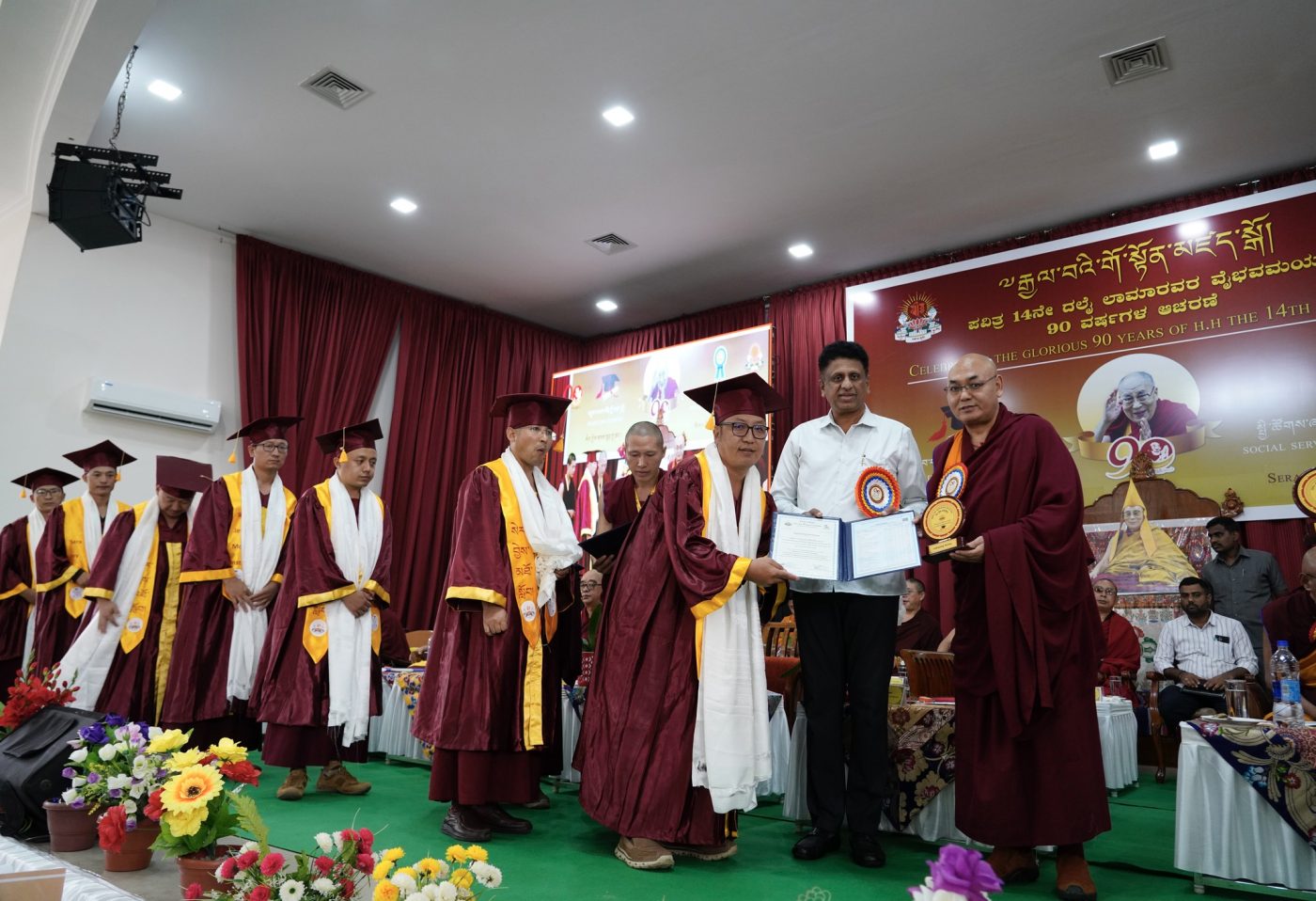
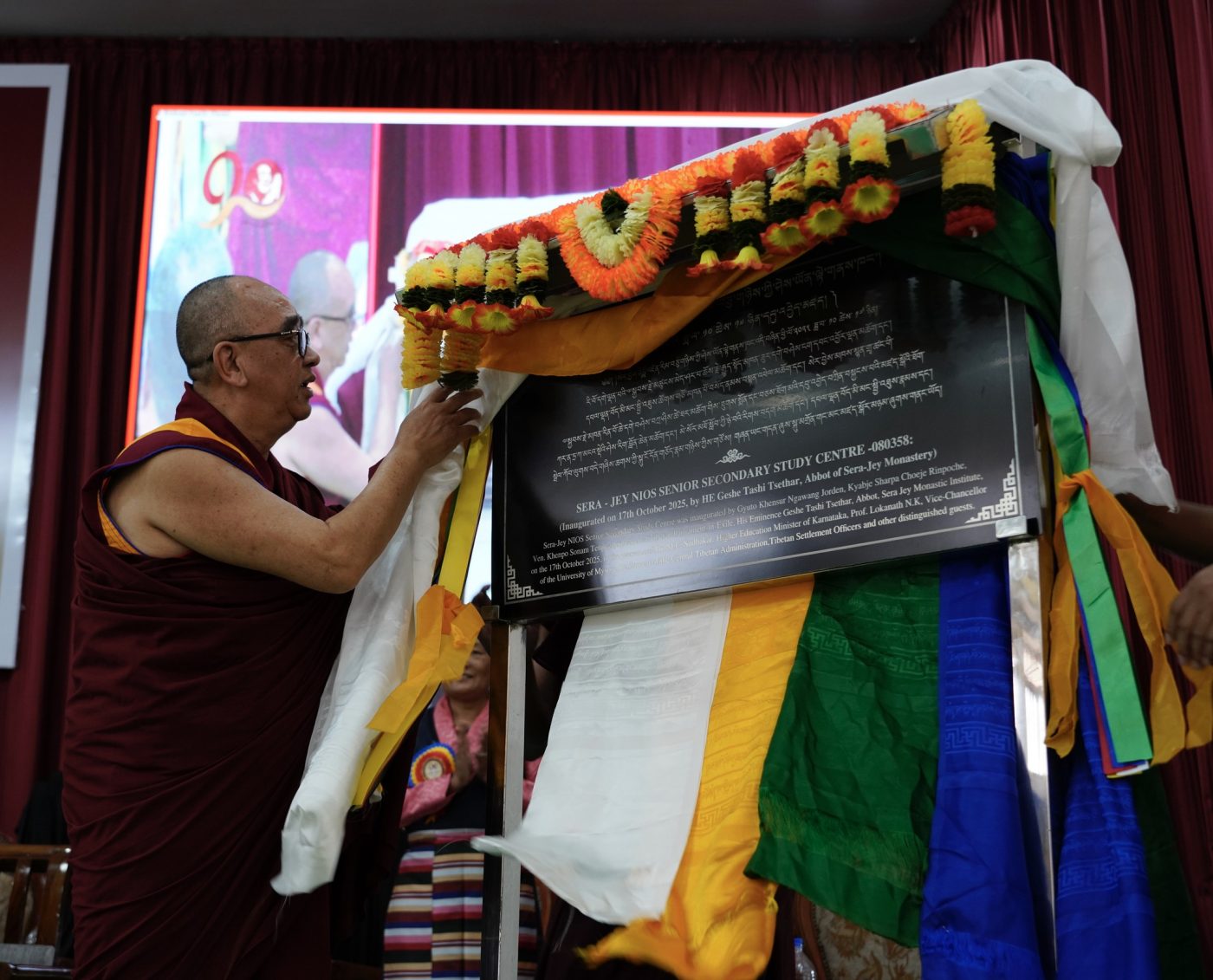
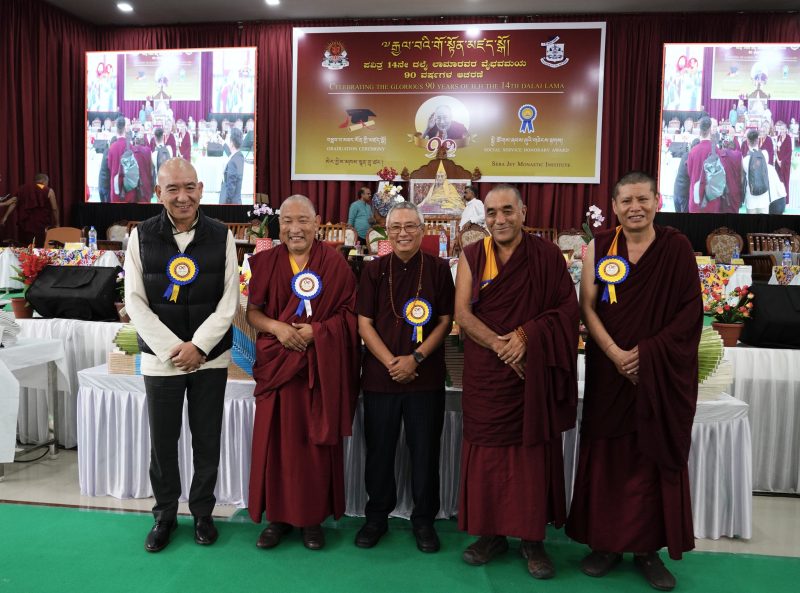
A significant highlight of the event was the graduation of the first batch of B.A. (Hons) students from the Sera Jey Monastic Institute. The program also included the presentation of a Social Service Award, the inauguration of the NIOS Senior Secondary Level Study Centre, and the release of a new publication.
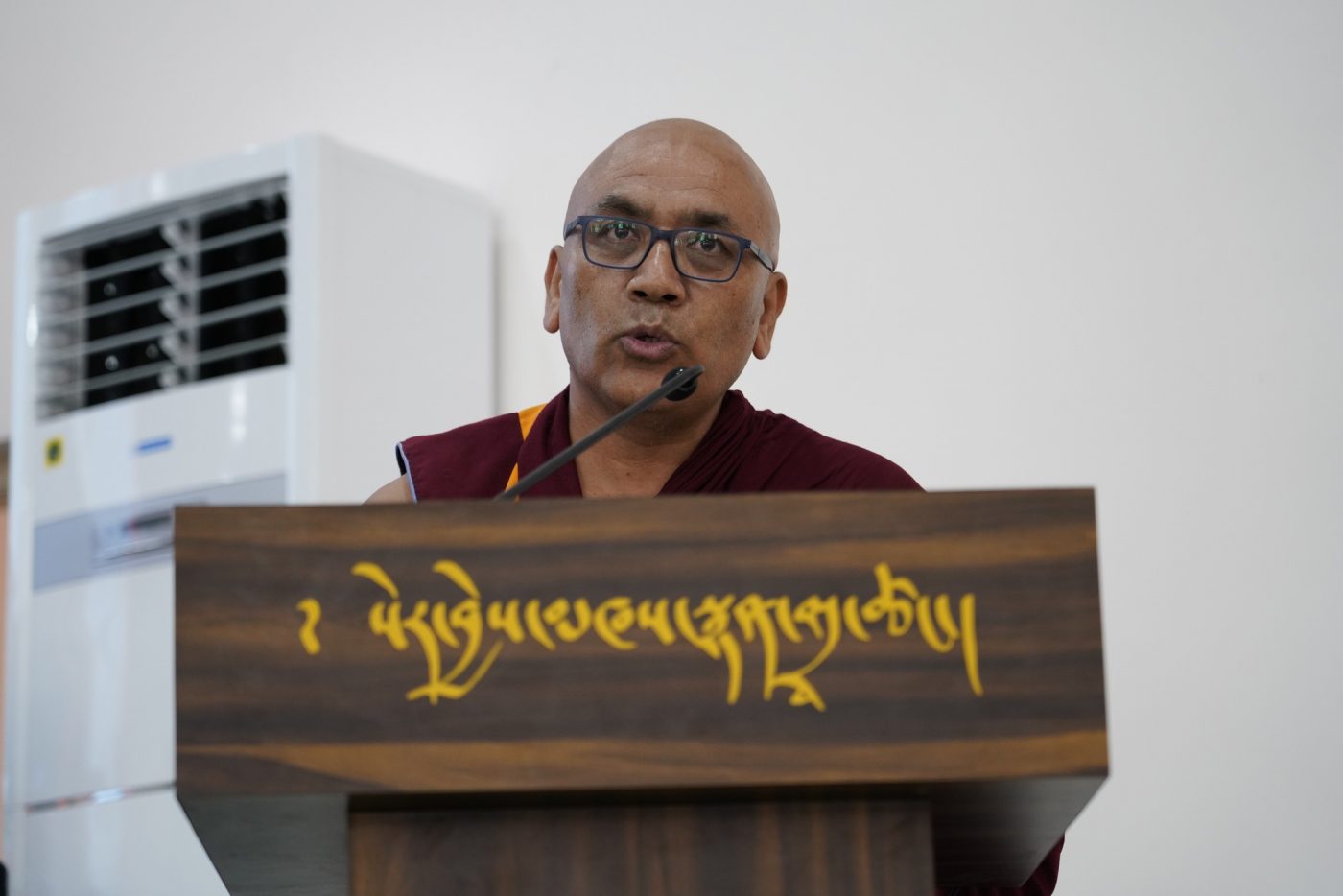
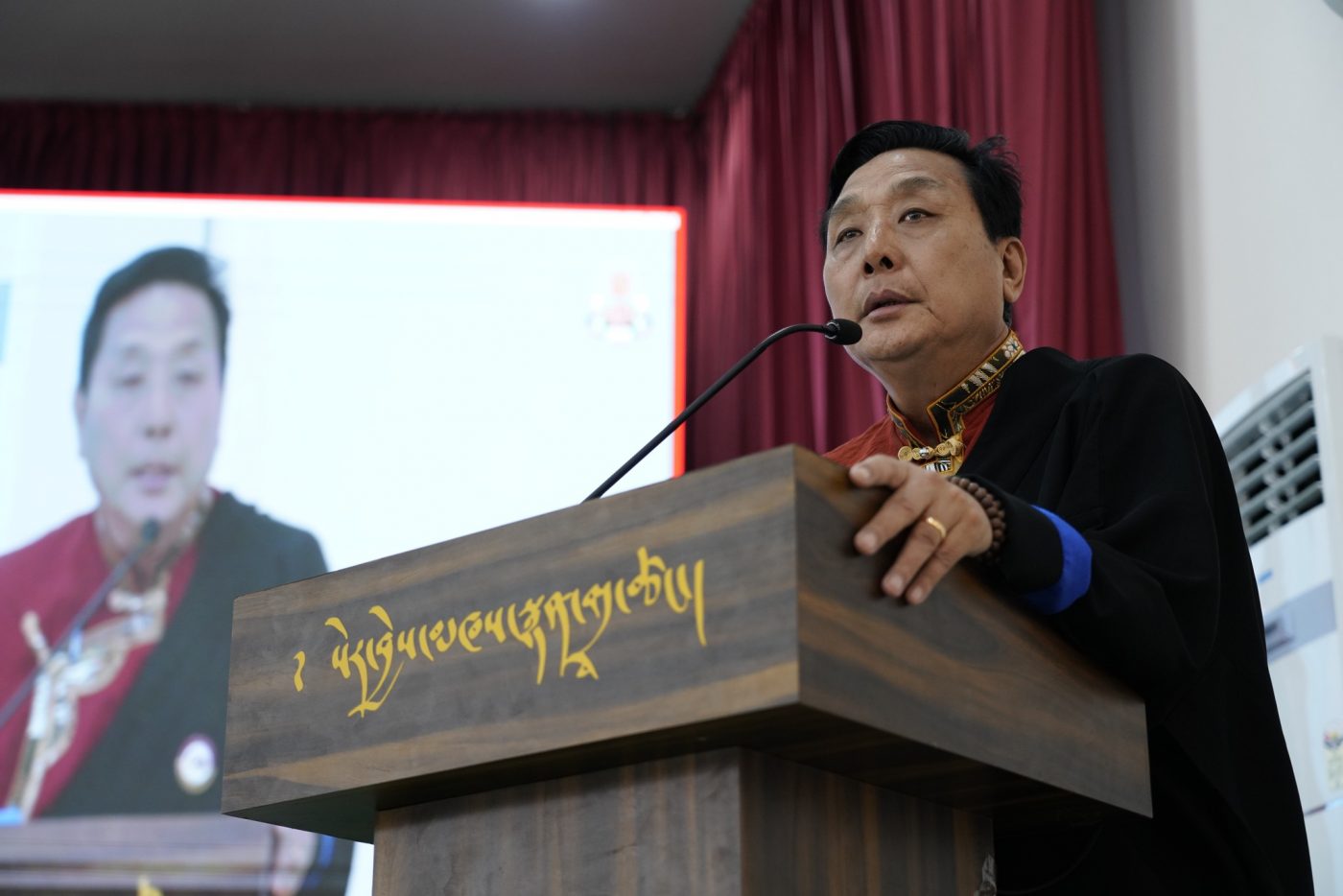
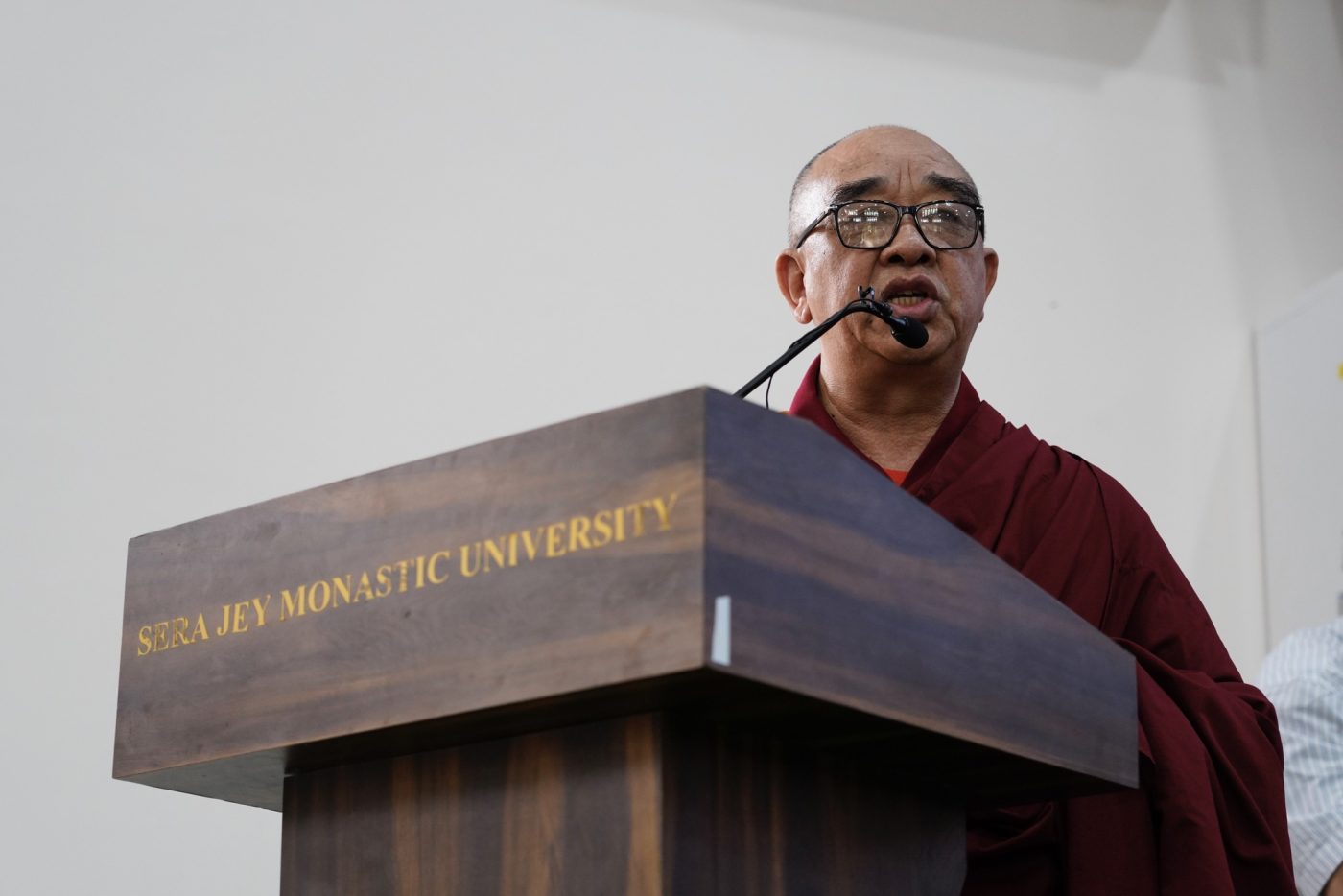
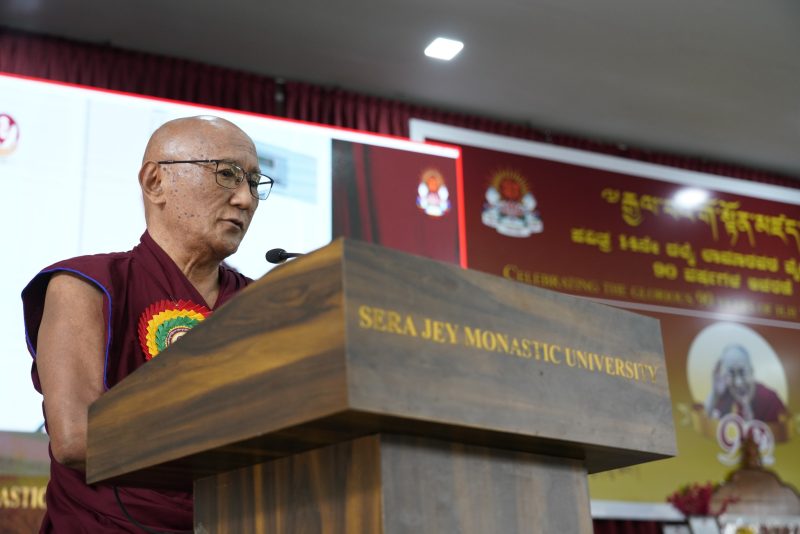
In his keynote address, Speaker Khenpo Sonam Tenphel expressed his deep appreciation for being invited to such a momentous event, emphasizing its significance in honoring His Holiness the Dalai Lama’s lifelong contributions to Tibetan religion, culture, and identity. “From the moment His Holiness arrived in exile to this day, now marking his 90th birthday, we must recognize his tireless efforts for the preservation of Tibetan Buddhism, politics, language, and heritage,” he stated.
He noted the vital support received from the Indian government and, in particular, the State of Karnataka, which played a crucial role in establishing settlements and monastic institutions for the Tibetan community in exile.
Recalling the early days in exile, he said “When we first arrived in India, we knew no one except the sky above and the earth beneath. Yet through determination and the guidance of His Holiness, Tibetan communities gradually rebuilt themselves.”
The Speaker highlighted the visionary support of Karnataka’s former Chief Minister, Nijalingappa, who responded positively to Prime Minister Nehru’s appeal for assistance and helped establish five major settlements in the South India, including the prominent monastic institutions of all major traditions.
He extended heartfelt gratitude to the University of Mysore for recognizing the academic achievements of Sera Jey’s postgraduate institute, emphasizing how its curriculum which includes ancient Indian philosophy, psychology, and the Tibetan language embodies the vision of His Holiness the Dalai Lama’s four principal commitments which are promotion of compassion and ethics, fostering inter-religious harmony, preservation of Tibetan religion, culture, and language, and revival and promotion of ancient Indian knowledge and secular ethics.
Speaker Khenpo Sonam Tenphel encouraged the graduates to carry forward this legacy, “As Je Dagnyi Chenpo said, one must first seek vast learning, then internalize all teachings as personal instructions, and finally engage in continuous practice. This is how one serves the Dharma.”
He urged the graduates to apply their education not only within the Tibetan community but also in wider societies especially in places where the Dharma has not spread, or where it has declined. “In today’s world, influence is not gained through power, but through the strength of one’s own qualities,” he emphasized. “Buddhist science and philosophy are systems of knowledge that transcend religion and can contribute meaningfully to global society.”
Drawing from Buddhist analogies and traditional sayings, the Speaker reminded students of the value of perseverance in study, likening the process to nurturing a tree until it bears fruit. He stressed the importance of internalizing knowledge through study, debate, and contemplation, and then skilfully transmitting it across cultures and societies.
He also acknowledged the historical contributions of Sera Jetsun Choeje and the strong lineage of scholarship upheld by Sera Jey Monastic Institute. Reflecting on his own studies at Namdroling Monastery, he noted the critical role of deep analysis and rigorous training in shaping a meaningful Buddhist education.
In closing, Speaker Tenphel extended his congratulations to the graduates and offered prayers for the long life of His Holiness the 14th Dalai Lama, the fulfilment of his aspirations, and the resolution of the Sino-Tibetan conflict. “May the activities of Sera Jey Monastic Institute in both the religious and educational fields flourish,” he concluded.