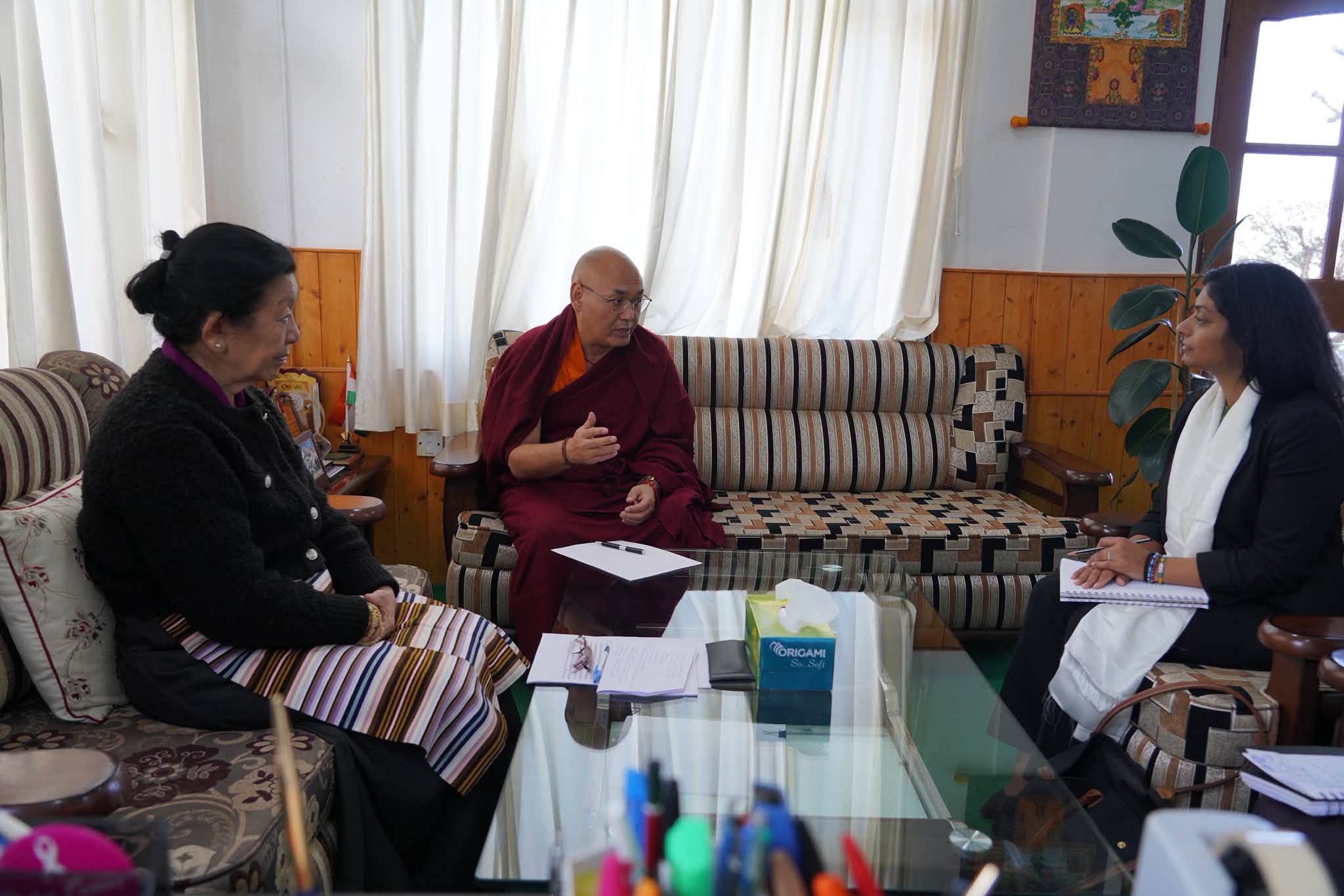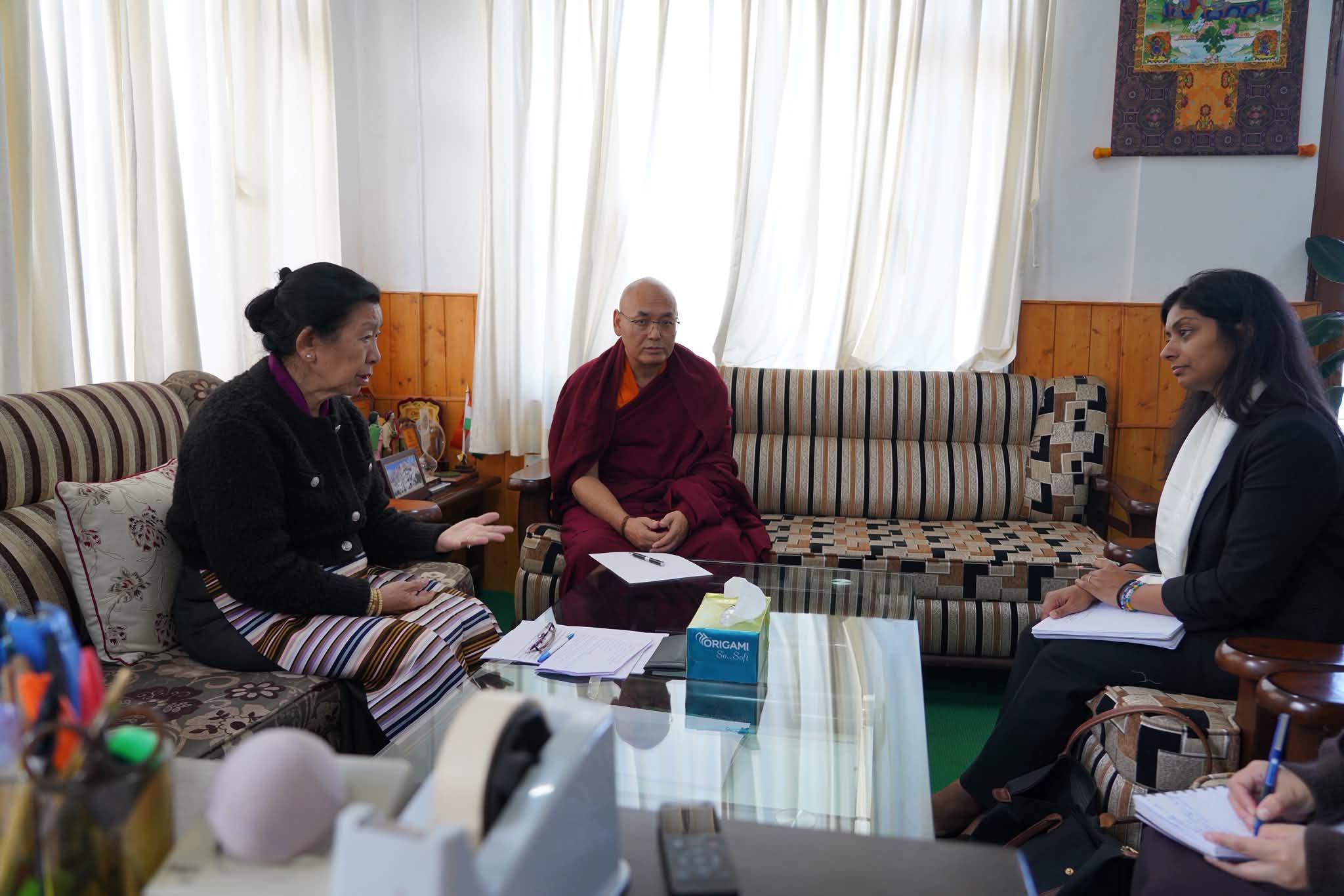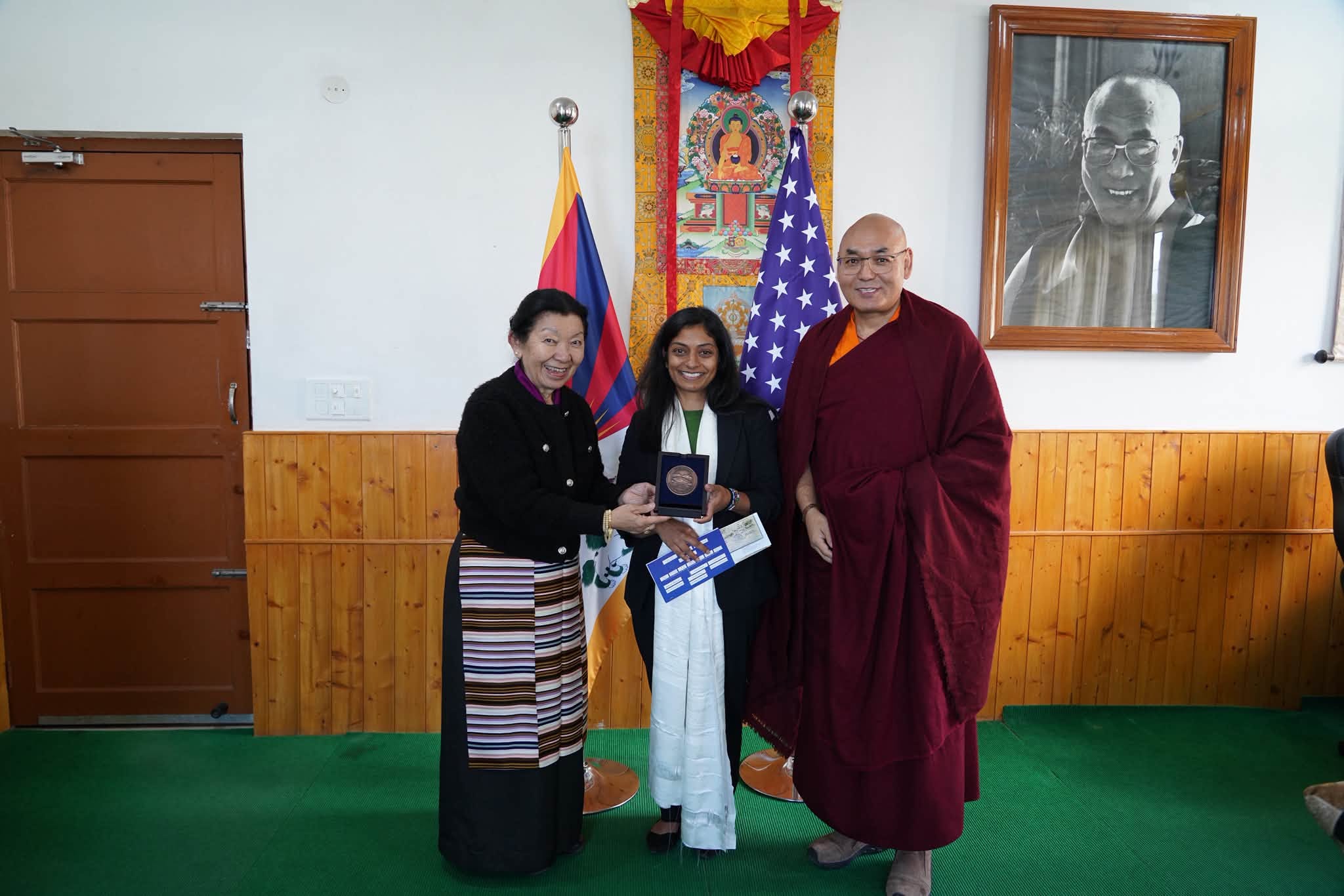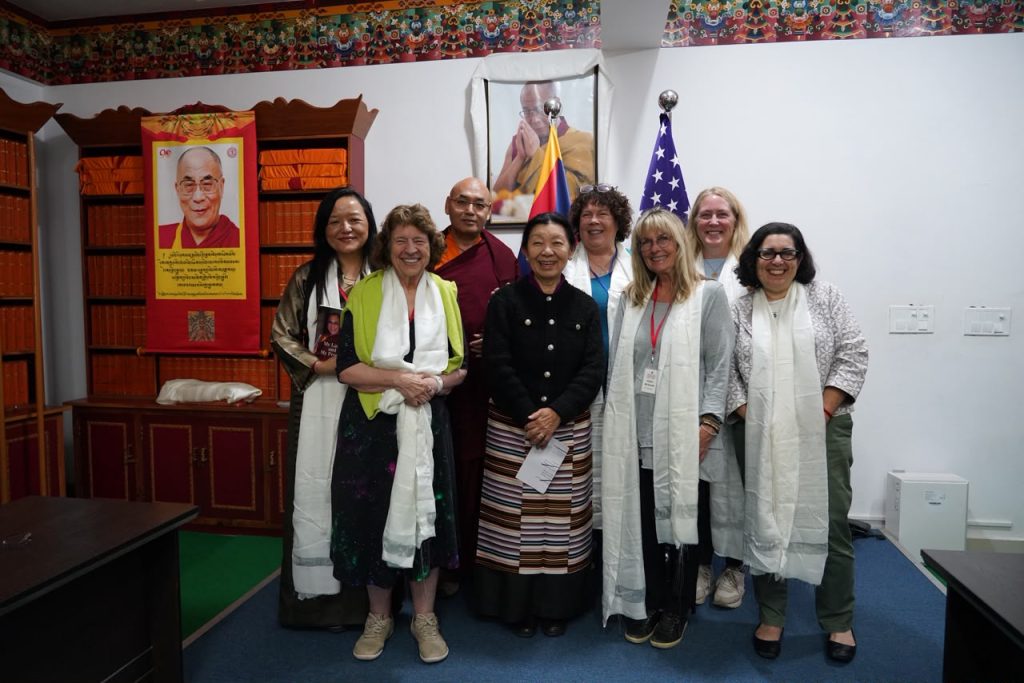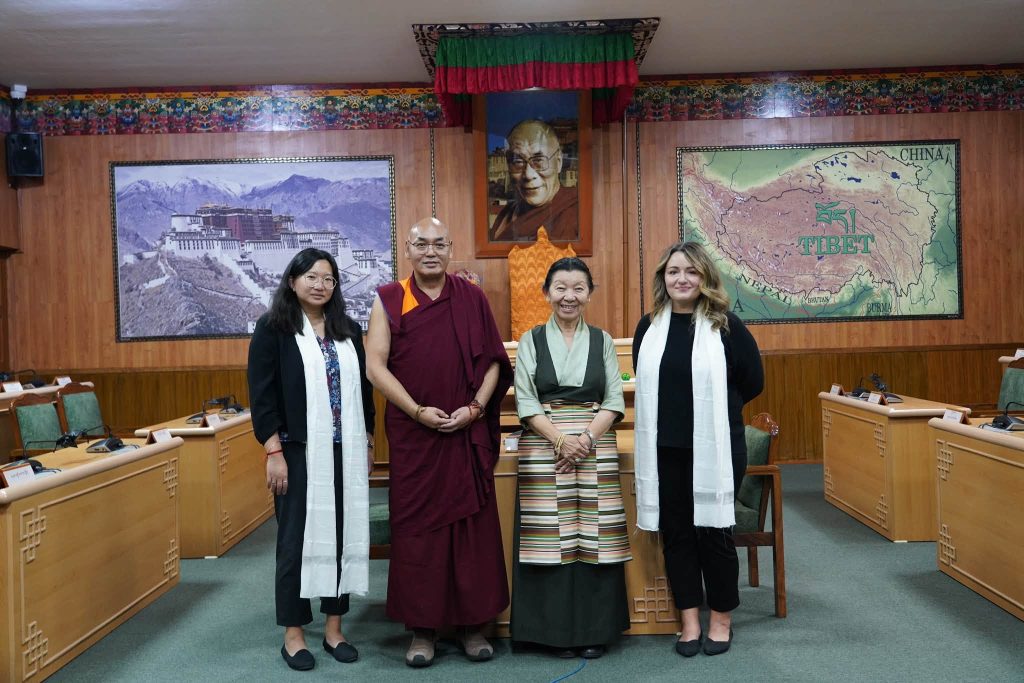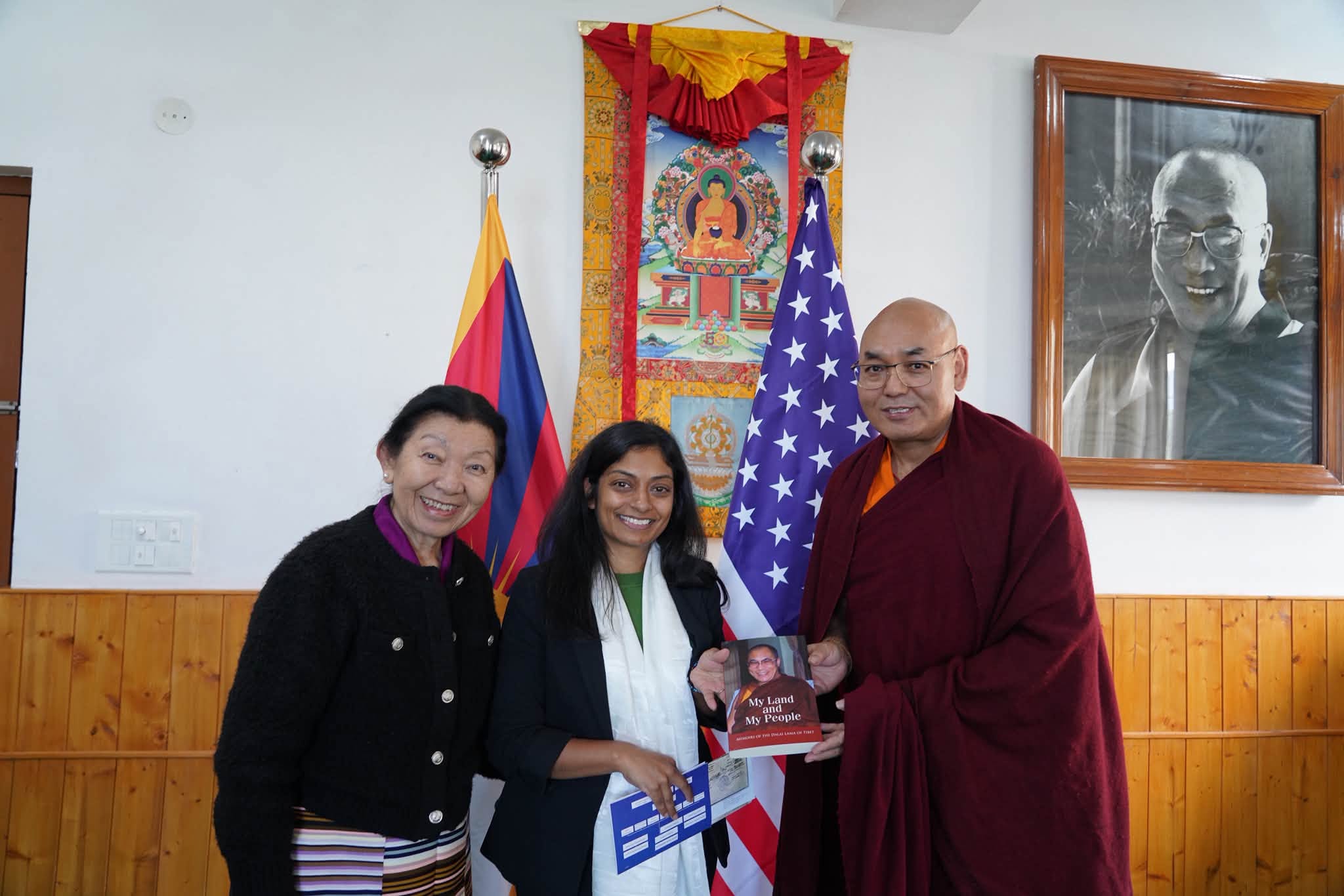
Dharamshala: On 19 October 2026, Sarita Vanka, Senior Staff Member of the U.S. Senate Appropriations Committee, visited the Tibetan Parliament-in-Exile and met with Speaker Dolma Tsering Teykhang and Deputy Speaker Khenpo Sonam Tenphel.
In welcoming the Senate staffer, the Deputy Speaker provided a historical overview of the development of Tibetan democracy in exile. He noted that, under the visionary leadership of His Holiness the 14th Dalai Lama, the Tibetan Parliament-in-Exile was established in 1960. In 1991, during the 11th session, the Charter of the Tibetans in Exile was adopted, formalizing the Parliament as a legislative body. In 2001, the Kalon Tripa (Prime Minister) was directly elected by the Tibetan public, and in 2011, His Holiness the Dalai Lama transferred all political and administrative authority to the democratically elected leadership. He further described the current democratic structure and the mechanisms by which elected officials fulfill the political and administrative responsibilities of the Central Tibetan Administration.
Additionally, the Deputy Speaker outlined the current composition of the Tibetan Parliament-in-Exile, its two annual sessions, and its advocacy initiatives through engagements with leaders in India and internationally. He also emphasized official visits by Members of Parliament to Tibetan settlements within their designated regions, as well as programs such as the World Parliamentarians’ Convention on Tibet (WPCT).
The Speaker commenced the proceedings with formal greetings, observing that the recurring visits by members and staff of the U.S. Congress to the Tibetan Parliament-in-Exile underscore their enduring support for the Tibetan people’s legitimate aspirations. She highlighted that consistent backing from the governments of India, the United States, and other nations has been instrumental in sustaining the Tibetan cause to the present day.
Addressing the deteriorating conditions within Tibet, the Speaker noted that on 1 July, 2026, the Chinese Communist government initiated implementation of the so-called “Ethnic Unity and Progress Law.” She asserted that, under the pretext of fostering unity, these regulations aim to assimilate Tibetans, while the justification of development is being leveraged to compromise Tibet’s fragile environment. In her view, these measures pose a fundamental threat to the survival of Tibet’s religion, culture, language, and national identity.
The Speaker further observed that the Tibetan Plateau which is commonly designated the “Third Pole” and the “Water Tower of Asia”, serves as the source of major river systems that sustain hundreds of millions of people across adjacent Asian nations. Consequently, safeguarding Tibet’s delicate ecosystem is of critical importance not only for Tibet but also for the broader region and the global community. She expressed concern that Chinese government activities, including dam construction and river flow obstruction, have accelerated environmental degradation and increased the risk of natural disasters in downstream countries. She therefore emphasized the urgent necessity of international cooperation to protect the Tibetan Plateau’s environment and water resources.
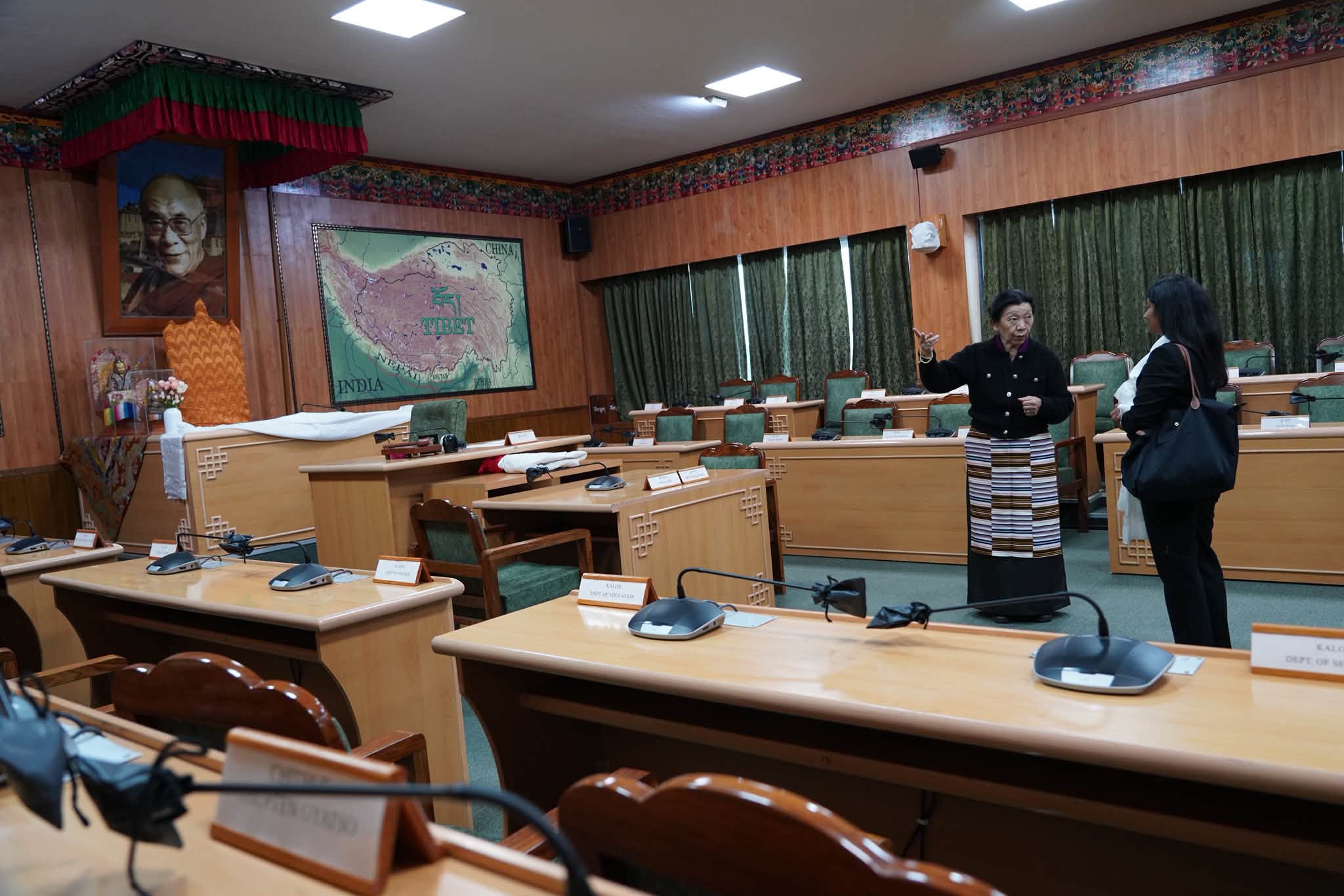
Following the meeting, the visiting guest was provided a tour of the Parliament Hall.